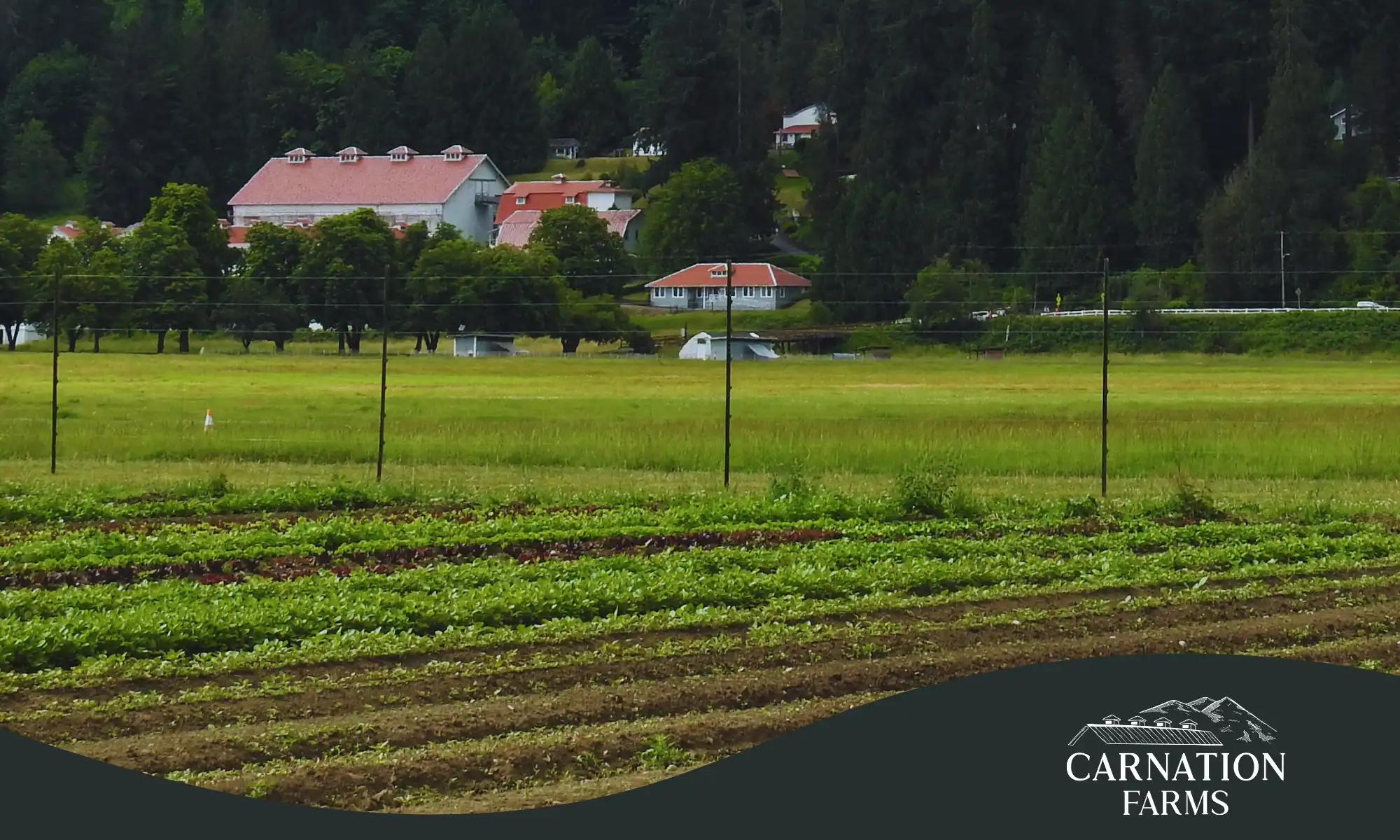
Part 1 framed regeneration from the ground up, showing how humus, cover cropping, and rotational grazing improve long‑term soil health and carbon storage. Part 2 widens the lens. Our 2024 Impact Report shows how at Carnation Farms, regeneration also means stewarding biodiversity, protecting waterways, coexisting with wildlife, and investing in farmer livelihoods and community education across our 800+ acres along the Snoqualmie River.
This holistic approach is measured with outcome tools such as Ecological Outcome Verification (EOV) and its Ecological Health Index (EHI), community engagement tracking, and operational data (e.g., reclaimed water volumes). Together they show how on‑farm practices are improving ecosystem function, strengthening our local food system, and engaging the Snoqualmie Valley community.
Key Takeaways
• EHI score improved from –12 to 5, showing stronger biodiversity and healthier ecosystems.
• 100% of water reused for irrigation, totaling 3.2 million gallons in 2024.
• Wildlife strategy shifted to species-specific management through a new committee.
• Employee and community focus built stability, education, and connection across the Snoqualmie Valley.
Ecosystem Health and Biodiversity Outcomes
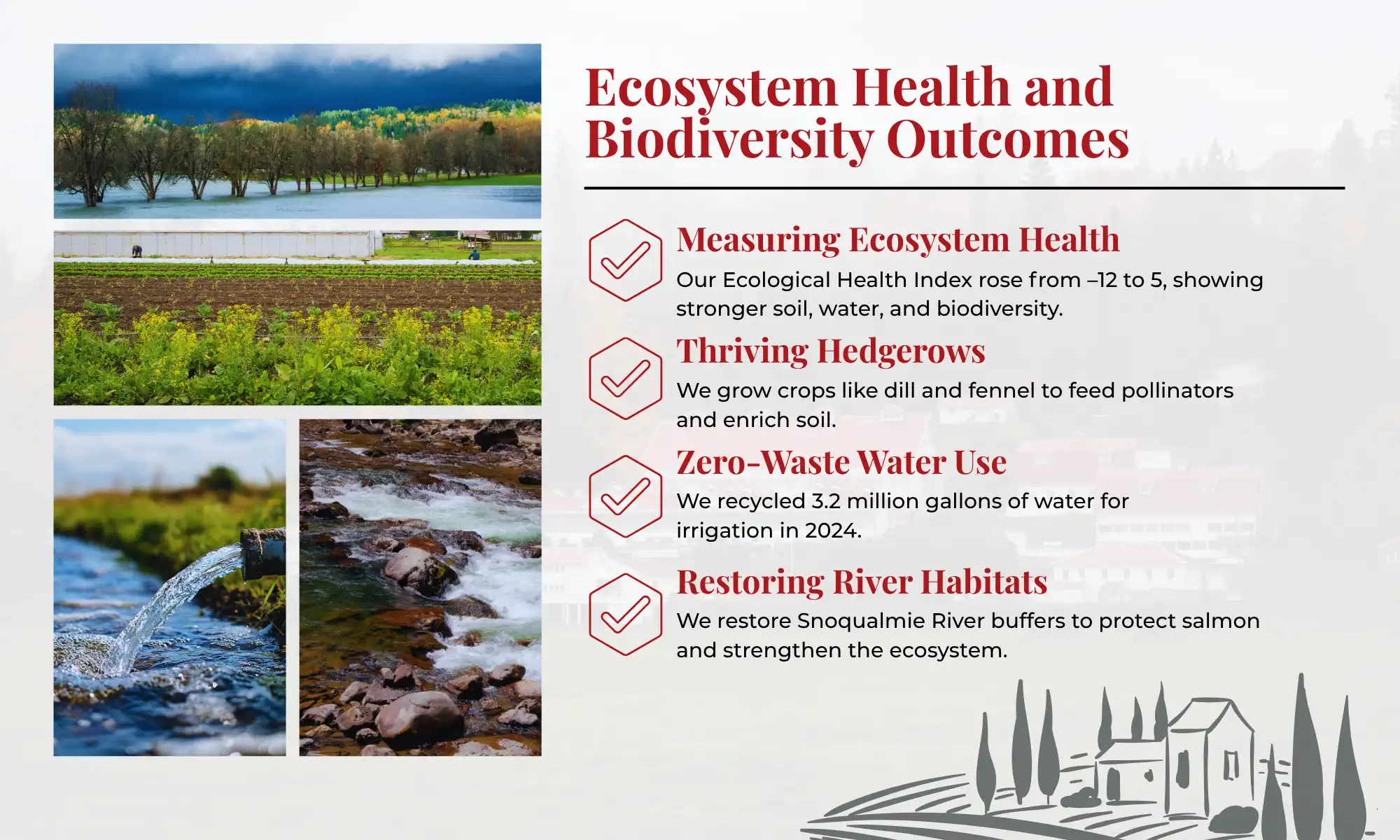
Carnation Farms showcases stronger ecosystem health through hedgerows, water reuse, and restored river habitats.
Measuring Ecosystem Improvement (EHI)
Carnation Farms participates in Ecological Outcome Verification (EOV) to track ecosystem function over time. The Ecological Health Index (EHI) improved from –12 (low) in 2023 to 5 (medium) in 2024, reflecting gains in plant community diversity and added habitat through hedgerows, riparian buffers, and wildlife corridors across the farm. This validated lift in EHI signals healthier nutrient and water cycling, stronger ground cover, and measurable progress in on-farm biodiversity.
Habitat Development through Hedgerows
We cultivate annual hedgerows using crops like cilantro, dill, and fennel. Originally planted for production, these now provide food and refuge for beneficial insects such as ladybugs and hover flies, and support pollinators including native bees and wasps. Many hedgerow crops are allowed to overwinter, creating a living repository for future seasons; the 2024 hedgerows will be mowed and tilled in 2025 after they have mostly decomposed. Plans include adding perennial hedgerows where locations are optimal.
Zero‑Waste Water Stewardship
Carnation Farms operates as a zero waste water facility by recycling 100% of event and facility water as Class B Reclaimed Water for irrigation. In 2024, the farm responsibly reused 3,209,000 gallons to support organic haylage production. This closed-loop Water Stewardship model conserves regional resources, supports drought resilience, and aligns production with the farm’s regenerative goals.
Protecting the Snoqualmie River and Salmon Habitat
Along the Snoqualmie River, Carnation Farms is restoring riparian buffers in collaboration with Stewardship Partners to stabilize banks, filter runoff, and provide habitat for native fish including Coho salmon. The farm also participates in Salmon Safe certification to reinforce water quality and habitat protection. Upcoming riparian work in winter 2025 includes planting deep-rooted trees, adding sprawling ground covers, and integrating elderberry to create a dual-purpose, harvestable buffer that supports both habitat and farm resilience in the Snoqualmie Valley.
Balancing Coexistence with Wildlife
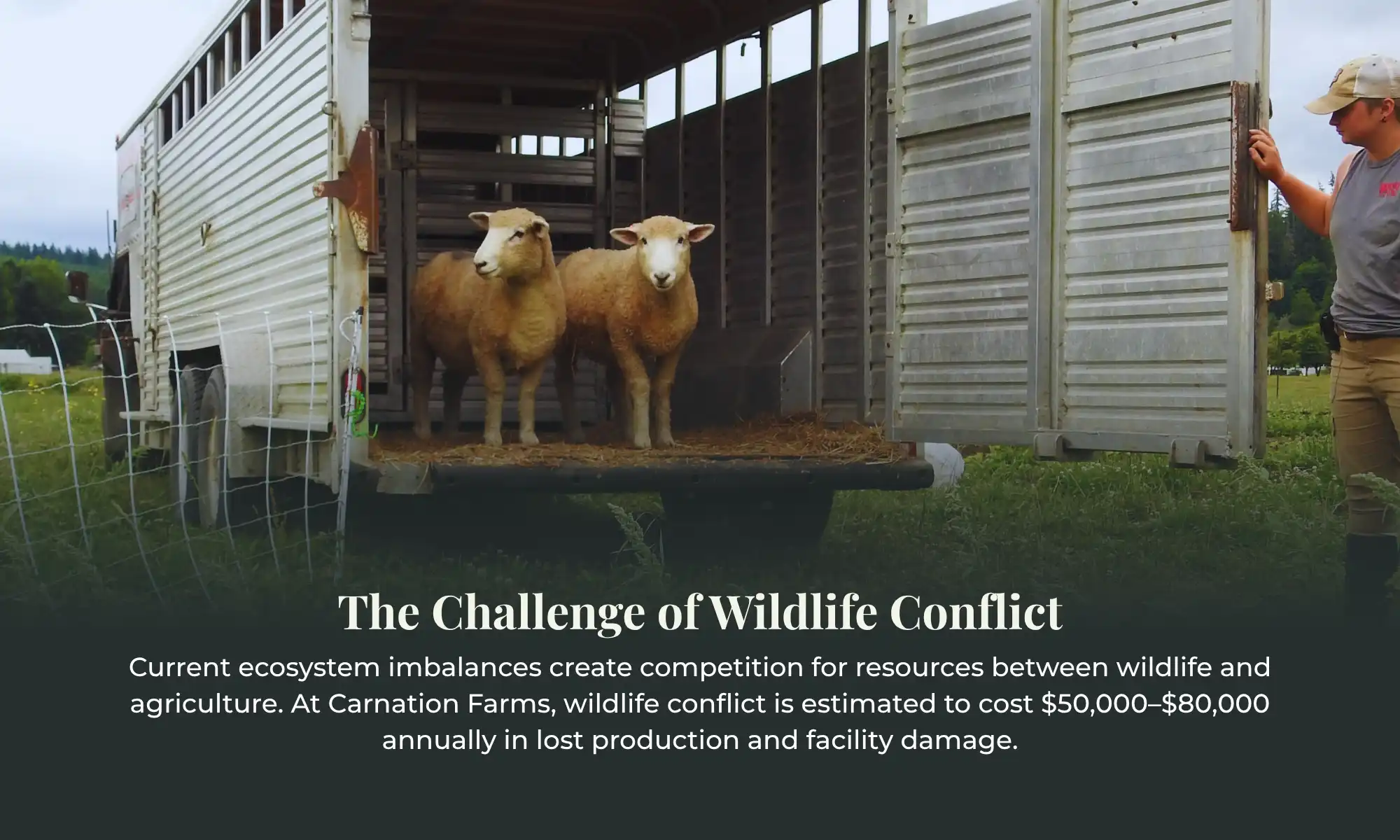
Sheep are transported for managed grazing as Carnation Farms works to balance wildlife coexistence and farm resilience.
The Challenge of Wildlife Conflict
Current ecosystem imbalances create competition for resources between wildlife and agriculture. At Carnation Farms, wildlife conflict is estimated to cost $50,000–$80,000 annually in lost production and facility damage. In 2024, working with the Washington Department of Fish and Wildlife (WDFW), our farm removed its game‑reserve designation to allow species‑specific management and direct wildlife to appropriate habitat and population levels. A Wildlife Committee now assesses species roles and designs systems that balance coexistence, with plans to improve wildlife corridors along the Snoqualmie River that also stabilize river banks and support salmon habitat.
Farmer Livelihoods and Community Resilience
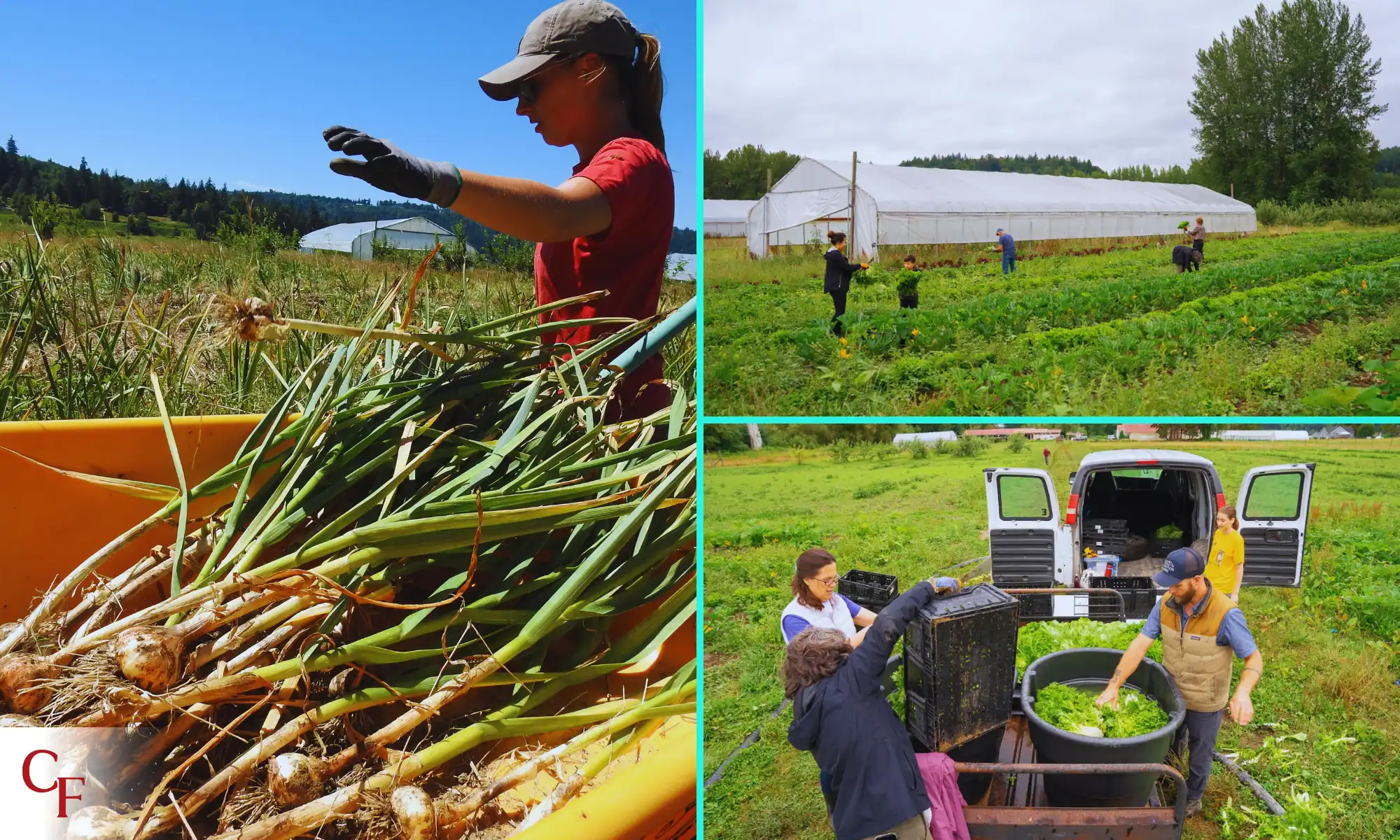
Farmers harvest, wash, and prepare produce at Carnation Farms, strengthening livelihoods and community resilience.
Investing in Employees
Healthy communities are just as essential as healthy ecosystems. Carnation Farms is committed to supporting its team through comprehensive benefits, fair pay, and access to resources that strengthen well-being. Employees are offered opportunities for professional growth, enjoy meaningful connections to the food they help produce, and benefit from programs that encourage balance and recovery. On-site housing options and a supportive workplace culture help foster a sense of belonging while ensuring staff can thrive in the Snoqualmie Valley community they serve.
Professional Pathways and Development
Carnation Farms partners with local organizations to diversify its talent pipeline and supports staff with bi‑annual reviews and goal‑setting, plus mentorship and funding for industry events. Opportunities in 2024 included the James Beard Foundation’s Chef Bootcamp for Policy and Change, Farmpreneur, and regional agricultural conferences, providing access to national leaders and ideas rarely available in farm employment.
Feeding People and Building a Community Hub
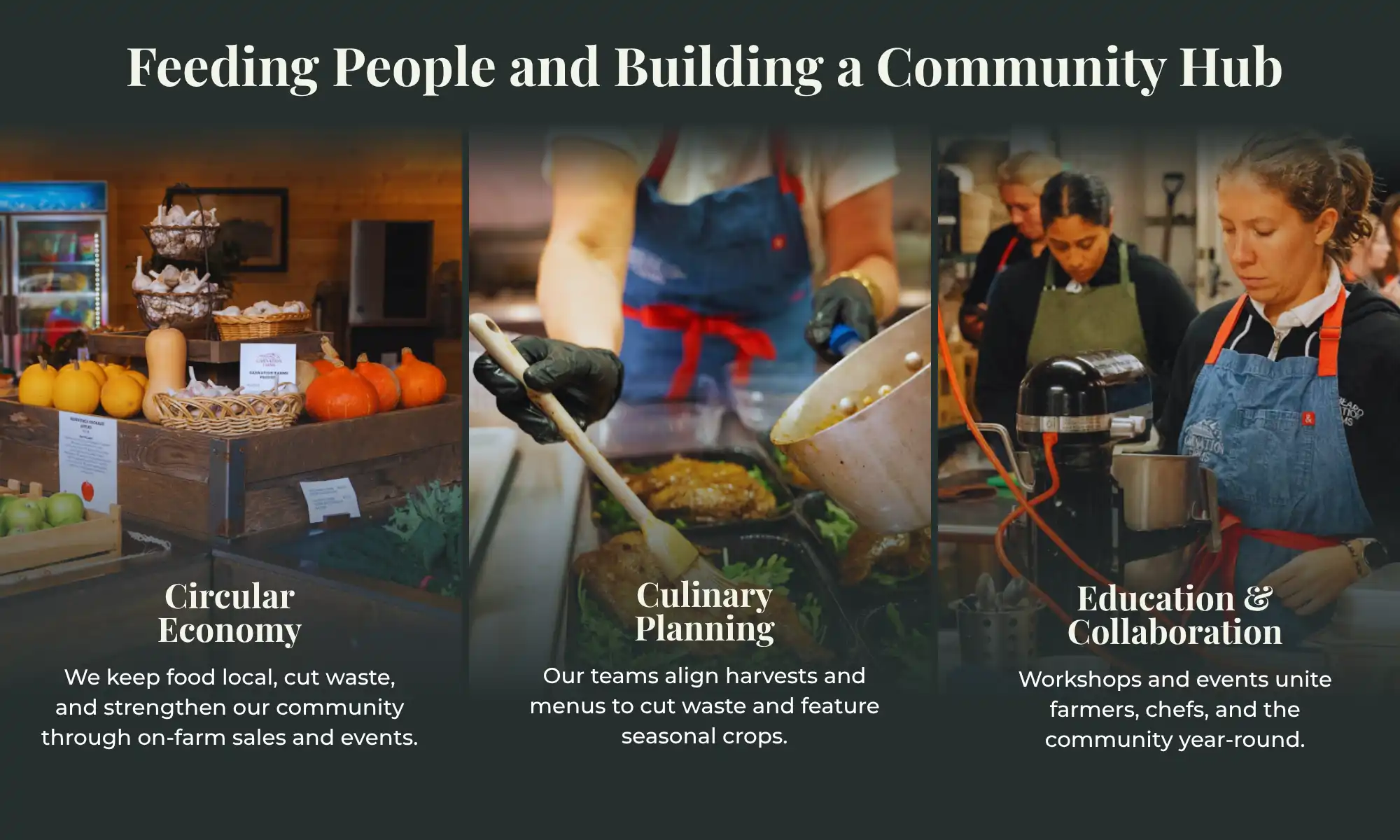
Carnation Farms strengthens its community hub through local food, culinary planning, and hands-on education.
A Circular Internal Economy
At Carnation Farms, regeneration continues beyond the soil and into how we feed our community. Much of what we grow is enjoyed right here on the farm through our Farmstand, community events, CSA, Meat Shares, and seasonal markets. This circular model keeps food local, reduces waste, and strengthens the connection between our land, our culinary team, and the people who experience the results of regenerative agriculture firsthand.
Culinary Planning and Zero Waste
Crop planning is coordinated by the Director of Regenerative Agriculture and the Director of Culinary Education and Operations. Each year, Eric Popp and Chef Kristen Schumacher review the prior season’s crops, sales across venues, customer response, and culinary preservation techniques to minimize waste. Throughout the season, they align harvest schedules and product inventory so menus reflect seasonal availability and the farm’s regenerative goals.
Educational Outreach and Collaboration
Programs include workshops and events that engage farmers, chefs, and the broader community: animal harvest and butchery workshops, James Beard Foundation’s Chef Bootcamp, the Seattle Culinary Academy Retreat, Washington State Sheep Producers’ lambing workshops, the Farmpreneur summit, community Seasonal Markets, Cooking Classes, Field Walks, and more. A new Participation Tracker launched in 2024 provides a baseline for year‑over‑year community engagement metrics.
Looking Ahead: The Continuous Journey
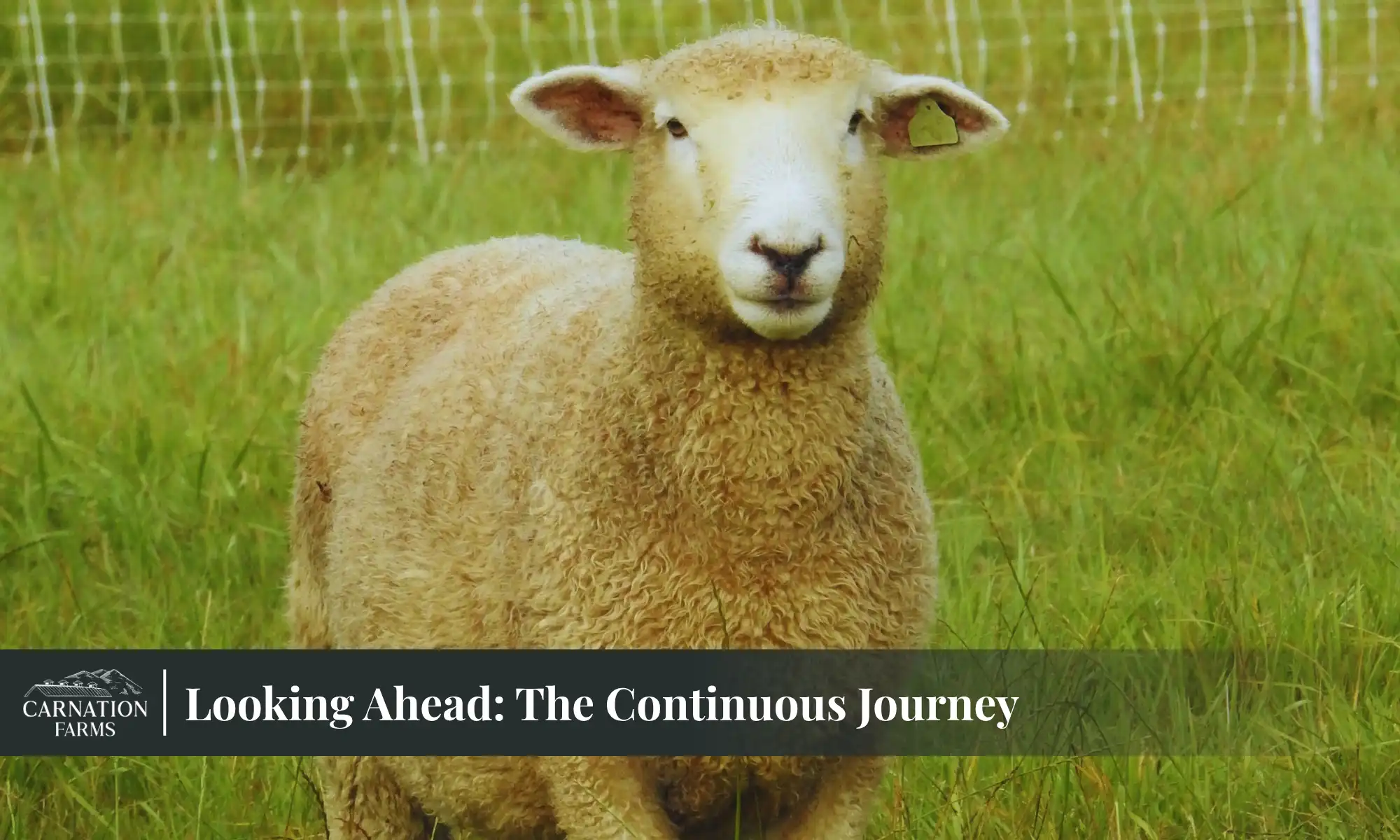
A pasture-raised sheep symbolizes Carnation Farms’ ongoing journey toward deeper regeneration and resilience.
The lessons from 2023 to 2024 are shaping a stronger future for Carnation Farms. In 2025, we will continue to refine what works, building on successful sequences of cover cropping, rotational grazing, and extended rest periods, while expanding soil testing and adaptive field management across more acres. Continuous observation by our Crops and Livestock teams ensures that our regenerative systems evolve with changing climate and market conditions.
Holistic regeneration at Carnation Farms now reaches every level of our operation, integrating Biodiversity, Water Stewardship, Wildlife Management, and Farmer Livelihoods with the soil-first foundation explored in Part 1. The 2024 Impact Report captures this progress, from a stronger Ecological Health Index (EHI) and over 3.2 million gallons of reclaimed water to expanded habitats and a growing community hub built around education and good food.
Learn more or get involved:
Check out the full 2024 Impact Report, connect with our team at info@carnationfarms.org or (425) 844-3100 to learn about upcoming workshops and farm events, or contact us here to discover how regenerative farming is transforming the Snoqualmie Valley, one season at a time.
2024 Impact Report Frequently Asked Questions
1. What is the Ecological Health Index and how did it change at Carnation Farms?
The Ecological Health Index (EHI) measures how well a farm’s ecosystem functions, including water, soil, and plant health. In 2024, our score improved from –12 to 5, reflecting stronger plant diversity, healthier soil structure, and expanded habitat through hedgerows and riparian buffers.
2. How does Carnation Farms practice Water Stewardship?
We recycle 100% of event and facility water as Class B Reclaimed Water, reusing over 3.2 million gallons in 2024 to irrigate organic haylage. This closed-loop system conserves resources, protects local waterways, and supports our long-term goal of zero-waste water management.
3. What specific habitat actions support Biodiversity and Salmon?
We plant annual hedgerows filled with flowering herbs that attract beneficial insects and pollinators, and we’re restoring riparian buffers along the Snoqualmie River with Stewardship Partners. These efforts improve water quality, protect Coho salmon, and create lasting habitat across the farm.
4. How is Wildlife Management changing on the farm?
To better balance farming and habitat, we worked with WDFW to remove our game-reserve status in 2024, allowing for targeted wildlife management. A new Wildlife Committee now develops coexistence strategies and monitors species health along the Snoqualmie River corridor.
5. What’s next for Carnation Farms?
We’ll continue refining the regenerative practices that proved successful in 2024. By expanding biodiversity projects, deepening our water conservation efforts, and strengthening connections between people, land, and food, Carnation Farms will keep advancing a resilient and regenerative future for the Snoqualmie Valley.
Recent Posts
 February 24, 2026
Best Snoqualmie Valley Meat Options in Washington