
At Carnation Farms, an 818-acre historic farm in Washington’s beautiful Snoqualmie Valley, we’re embracing a holistic approach to food production that’s reshaping how we think about farming and our relationship with the land. Regenerative agriculture describes farming systems that improve water and air quality, enhance ecosystem biodiversity, produce nutrient-dense food, and store carbon to help mitigate the effects of climate change.
By adopting regenerative practices, we can create resilient food systems that thrive for generations, improving soil health and supporting local communities.
Key Takeaways
- Regenerative agriculture improves ecosystem biodiversity and produces nutrient-dense food.
- Carnation Farms is a community-based hub for regenerative food and agriculture.
- Resilient food systems can be created by adopting regenerative agriculture.
- Soil health is improved through regenerative practices.
The Crisis in Modern Food Production
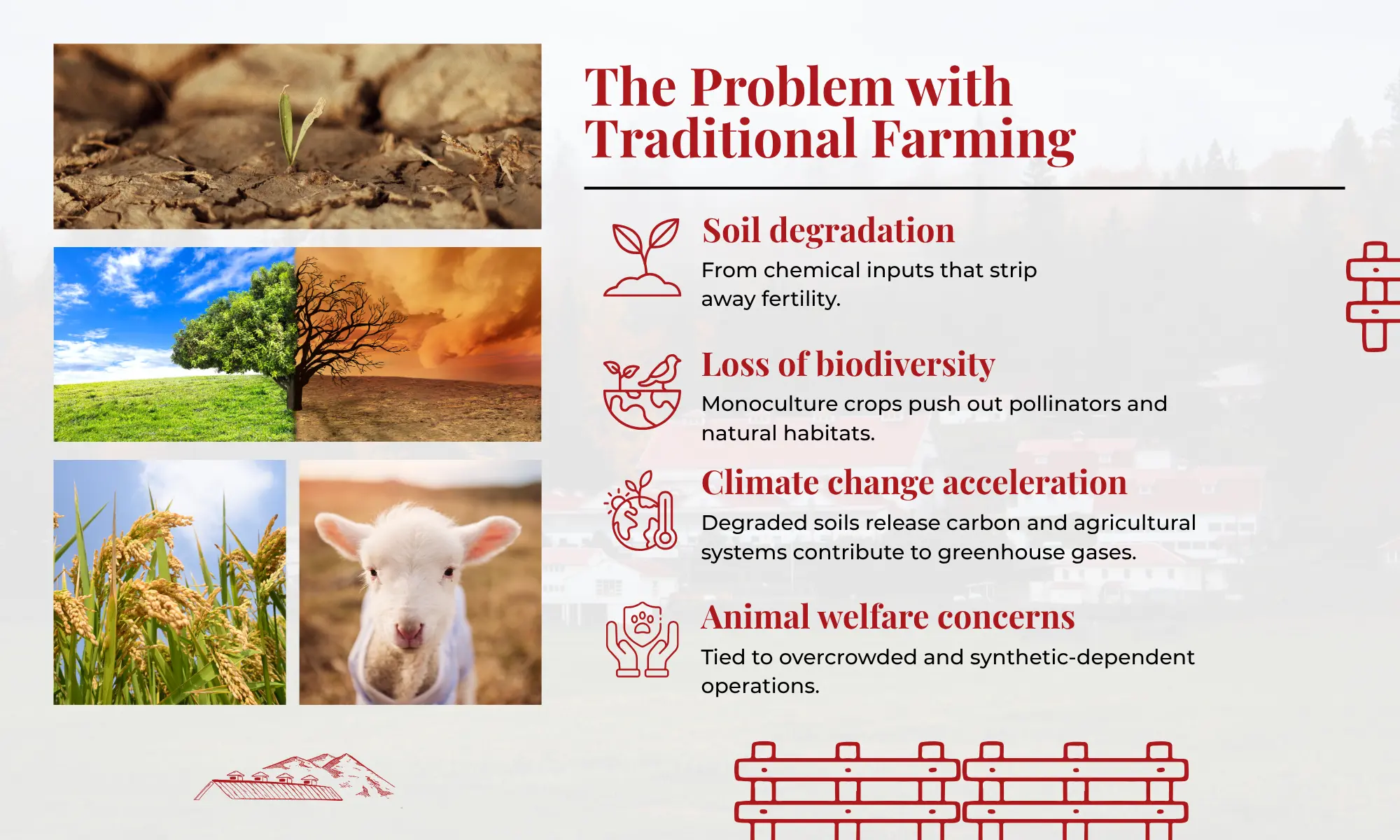
Traditional farming methods contribute to soil degradation, biodiversity loss, and climate challenges worldwide.
Our current food production systems are unsustainable and threaten future food security. The global food system is responsible for significant environmental degradation, including one-third of greenhouse gas emissions, 70% of freshwater use, and 90% of tropical deforestation.
The Problem with Traditional Farming
Modern industrial agriculture has delivered high yields but left a heavy environmental footprint:
- Soil degradation from chemical inputs that strip away fertility.
- Loss of biodiversity as monoculture crops push out pollinators and natural habitats.
- Climate change acceleration as degraded soils release carbon and agricultural systems contribute to greenhouse gases.
- Animal welfare concerns tied to overcrowded and synthetic-dependent operations.
Environmental Impacts of Conventional Farming
Conventional farming practices have severe environmental impacts. Intensive tilling, monocropping, and chemical dependencies strip soils of organic matter and beneficial microorganisms, leading to decreased fertility and resilience over time. This not only affects the land’s productivity but also contributes to climate change through greenhouse gas emissions from soil disturbance and fertilizer production. The use of synthetic fertilizers and pesticides can run off into waterways, creating dead zones in aquatic ecosystems and contributing to biodiversity loss.
The Vicious Cycle of Soil Degradation
Soil degradation creates a troubling feedback loop. As soils become less productive, more land is cleared for agriculture, which accelerates the degradation. This cycle reduces nature’s capacity to mitigate these effects, making it essential to adopt regenerative farming practices that restore rather than extract.
Understanding Regenerative Agriculture
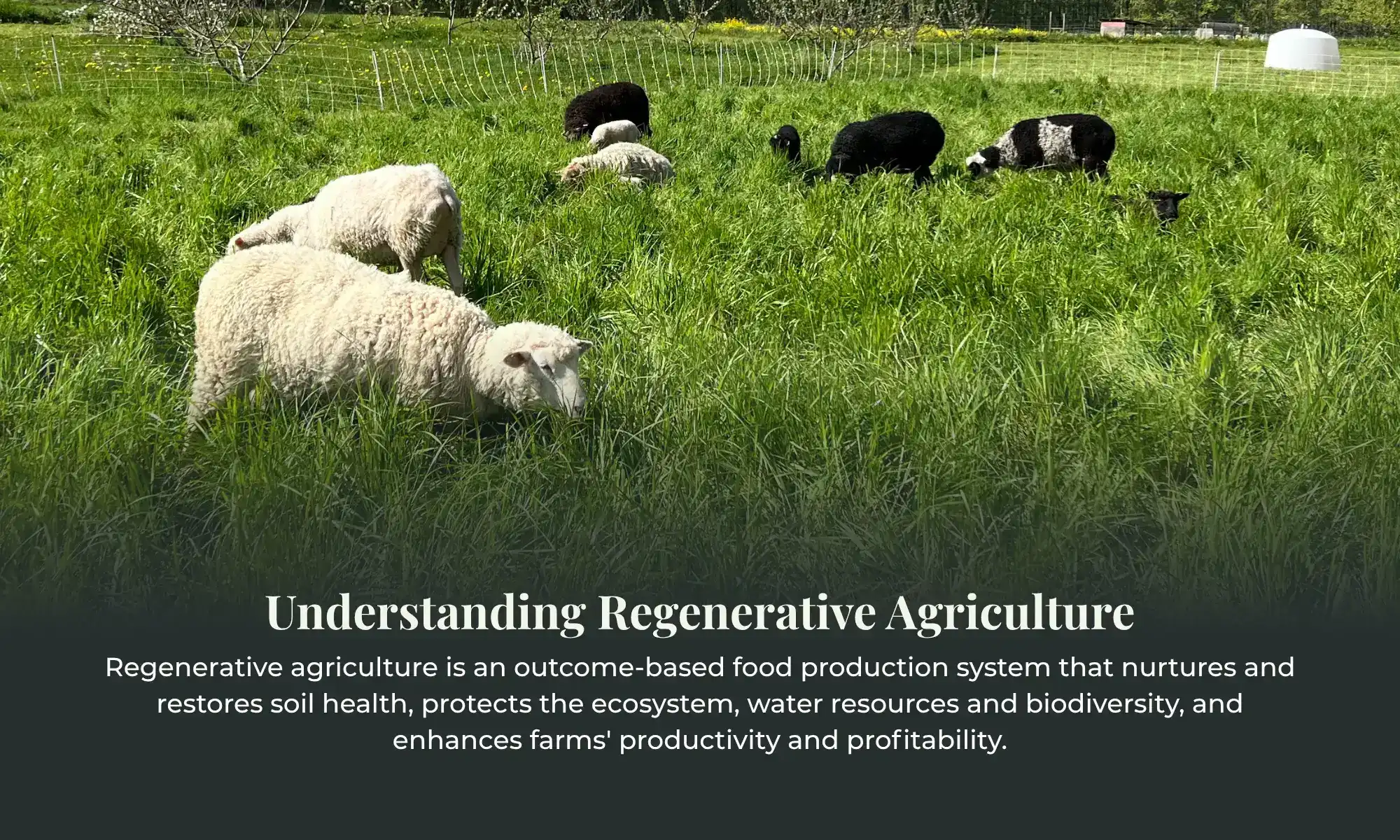
Sheep grazing on lush pastures represent regenerative agriculture that restores soil and supports biodiversity.
Regenerative agriculture is an outcome-based food production system that nurtures and restores soil health, protects the ecosystem, water resources and biodiversity, and enhances farms’ productivity and profitability.
Definition and Core Philosophy
We define regenerative agriculture as a holistic approach to food production that goes beyond merely sustaining current conditions to actively improving ecosystem health, soil fertility, and biodiversity while producing nutritious food. The core philosophy centers on viewing farms as integrated ecosystems rather than production facilities, recognizing that healthy soil is the foundation for healthy plants, animals, humans, and ultimately, a healthy planet.
Unlike conventional farming that often takes more from the land than it returns, regenerative agriculture works to create abundance through practices that mimic and enhance natural processes rather than fighting against them.
Beyond Sustainability: Restoration vs. Maintenance
Beyond sustainability, regenerative agriculture focuses on restoration and regeneration of natural systems to higher levels of health and productivity. Instead of simply maintaining current conditions (which may already be degraded), regenerative agriculture aims to improve the overall ecosystem.
| Aspect | Sustainability | Regenerative Agriculture |
|---|---|---|
| Focus | Maintaining current conditions | Restoring and regenerating natural systems |
| Outcome | Prevents further degradation | Improves ecosystem health and productivity |
| Approach | Minimizing harm | Creating abundance through natural processes |
Indigenous Roots and Traditional Wisdom
Many of the principles we now call “regenerative” have deep indigenous roots in farming traditions from around the world. For example, the popular Native American Three Sisters planting (corn, beans, and squash) and traditional Hawaiian ahupua’a land management are ancestral farming systems that worked in harmony with natural cycles, embodying traditional wisdom.
At Carnation Farms, we honor these indigenous roots while integrating modern scientific understanding to create food systems that heal rather than harm the land.
Environmental Benefits of Regenerative Practices
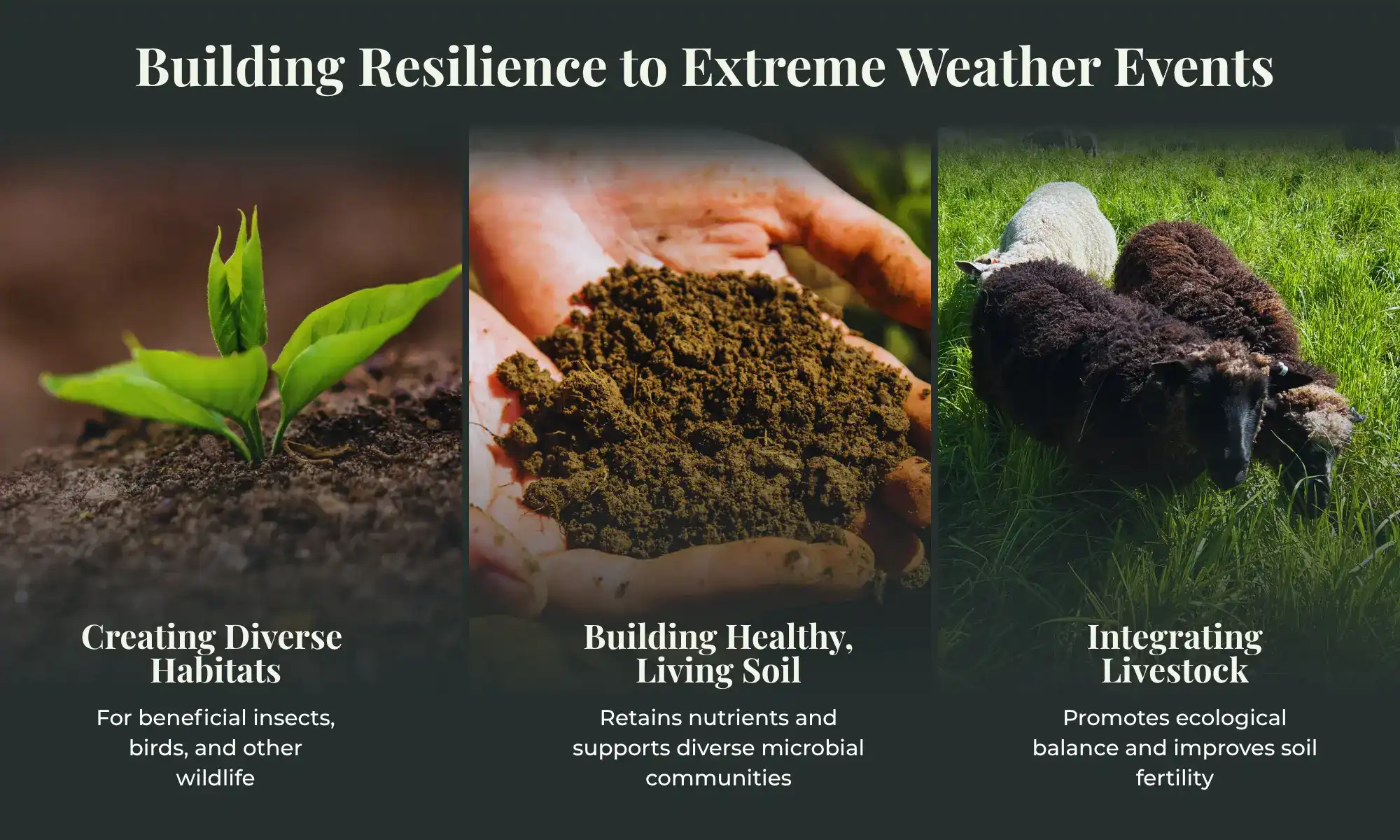
Regenerative practices like soil building, habitat creation, and livestock integration strengthen ecosystems and resilience.
Regenerative practices offer a holistic approach to farming, yielding numerous environmental advantages. At Carnation Farms, we’ve witnessed firsthand the positive impact of these practices on our ecosystem.
Building Healthy, Living Soil
One of the most significant benefits of regenerative agriculture is the improvement of soil health. As we build healthy, living soil, we increase its capacity to store carbon, retain nutrients, and support diverse microbial communities. This, in turn, forms the foundation of a thriving farm ecosystem. Healthy soils are the backbone of regenerative agriculture, enabling our land to be more productive and resilient.
Creating Habitat for Biodiversity
Furthermore, regenerative farms create diverse habitats for beneficial insects, birds, and other wildlife. Through our practices, we effectively create biodiversity hotspots within our agricultural landscape. This increased biodiversity above and below ground creates functional ecosystems that provide natural pest control and pollination services, making our farm more resilient and sustainable.
Building Resilience to Extreme Weather Events
Regenerative farms with healthy soils are better equipped to withstand extreme weather events such as valley floods. Healthy soils are slower to dry out during droughts and have a greater capacity to absorb water during heavy rainfall, reducing the risk of flooding. This resilience is crucial as climate change intensifies and weather patterns become more unpredictable.
| Regenerative Practice | Climate Benefit |
|---|---|
| Minimizing Soil Disturbance | Reduces greenhouse gas emissions by preserving soil carbon |
| Keeping Soil Covered | Enhances carbon sequestration and improves soil health |
| Integrating Livestock | Promotes ecological balance and improves soil fertility |
Economic Advantages for Farmers and Communities
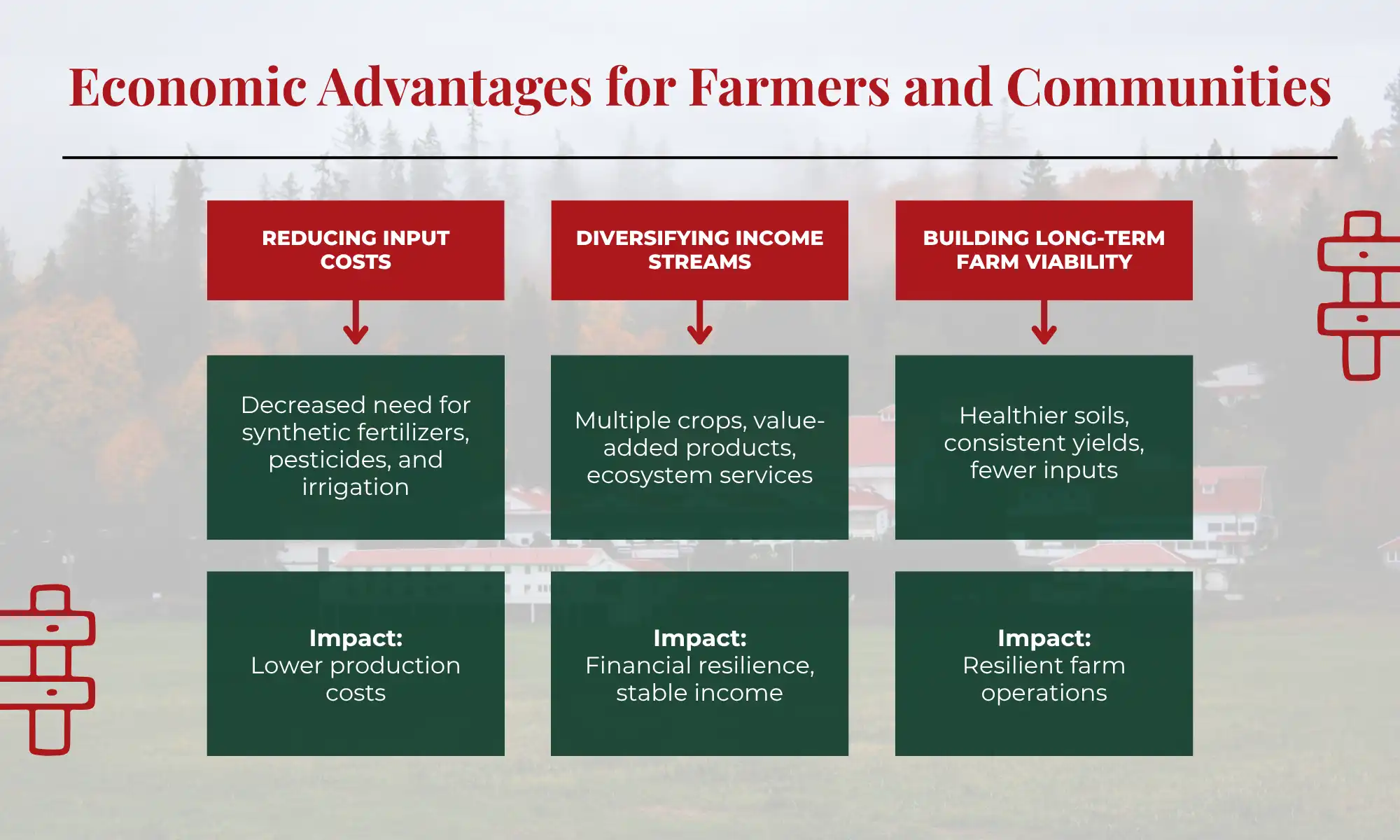
Regenerative practices like soil building, habitat creation, and livestock integration strengthen ecosystems and resilience.
Regenerative agriculture offers numerous economic benefits for farmers and local communities. By improving soil health, reducing input costs, and diversifying income streams, farmers can create more resilient and profitable agricultural businesses.
Reducing Input Costs and Dependencies
One of the most immediate economic benefits of regenerative agriculture is the reduction in input costs. As soil health improves, farmers typically see a decreased need for expensive synthetic fertilizers, pesticides, and irrigation. This reduction in costs can significantly lower production costs over time, making farming operations more economical.
For instance, a Havard cited study found that an investment of $57 billion in regenerative agricultural practices could yield a projected return of $1.9 trillion through savings on costly inputs and increased farm profits.
Diversifying Income Streams
Diversifying income streams is another key economic advantage of regenerative agriculture. By growing multiple crops, producing value-added products, and participating in ecosystem services, farmers can create financial resilience. When one market is down, others can compensate, providing more stable year-round income.
Some regenerative farmers are also accessing new revenue opportunities through carbon markets and payments for ecosystem services, recognizing the valuable environmental benefits their practices provide to society.
Building Long-term Farm Viability
Building long-term farm viability is perhaps the most significant economic advantage of regenerative agriculture. Healthier soils produce more consistent yields with fewer inputs, creating operations that can weather both market and climate fluctuations.
In our community work throughout the Snoqualmie Valley, we’ve seen how regenerative farms create ripple effects in local economies by supporting more agricultural jobs, attracting food tourism, and keeping food dollars circulating within the region.
| Economic Benefits | Description | Impact |
|---|---|---|
| Reducing Input Costs | Decreased need for synthetic fertilizers, pesticides, and irrigation | Lower production costs |
| Diversifying Income Streams | Multiple crops, value-added products, ecosystem services | Financial resilience, stable income |
| Building Long-term Farm Viability | Healthier soils, consistent yields, fewer inputs | Resilient farm operations |
Practical Regenerative Techniques for Different Landscapes
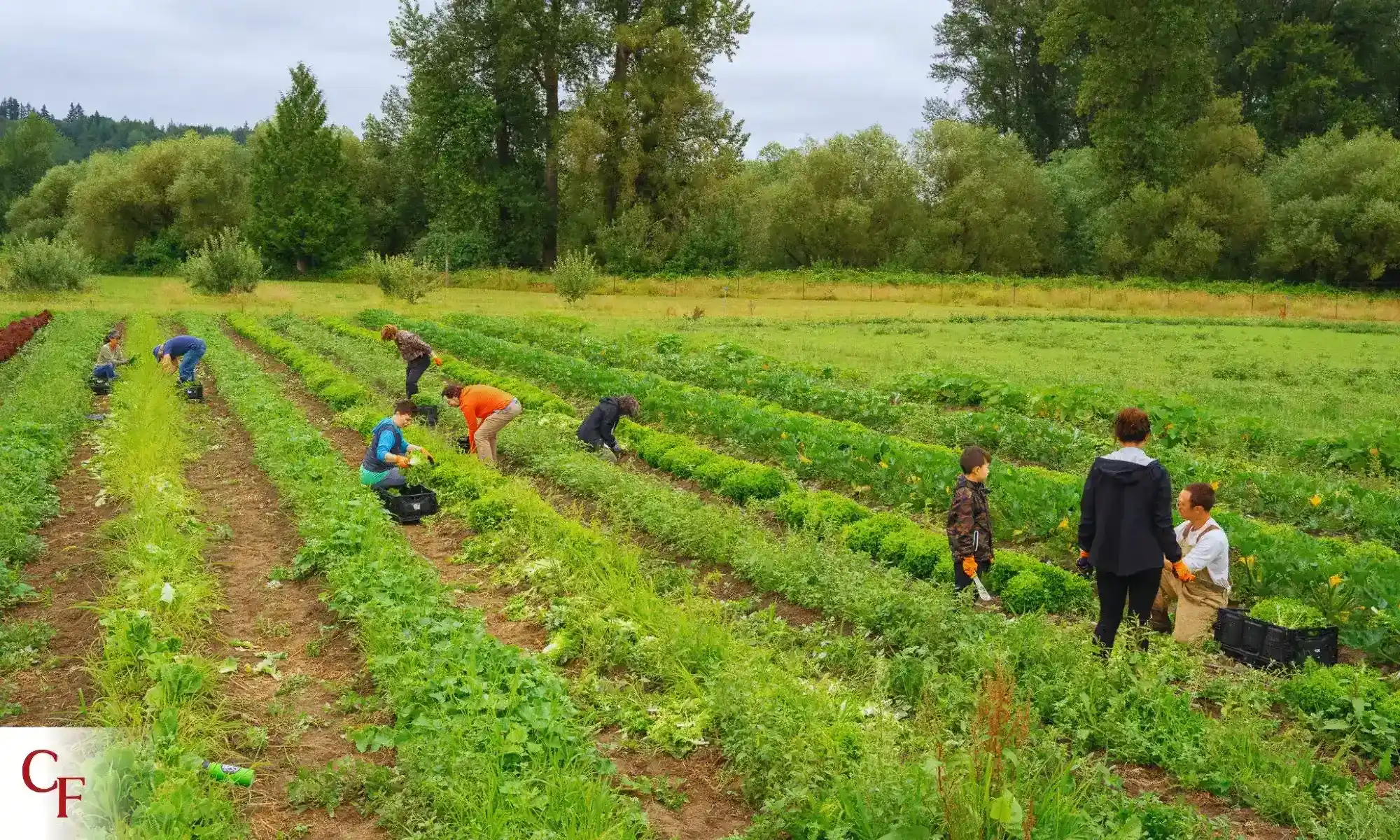
Farmers at Carnation Farms apply regenerative techniques like crop diversity and soil restoration across varied landscapes.
The versatility of regenerative agriculture lies in its ability to be adapted to various landscapes and climates. At Carnation Farms, we recognize that different farming operations require tailored approaches to regenerative practices. This is why we implement and teach various techniques that can be adapted to different landscapes, climates, and farming operations.
Agroforestry and Silvopasture Systems
Agroforestry integrates trees and shrubs into crop and animal farming systems, creating multi-layered ecosystems that maximize both vertical space and sunlight while diversifying farm products.
Silvopasture, a specific type of agroforestry, combines trees with livestock and forage production in a mutually beneficial system where animals benefit from shade and additional food sources while their manure fertilizes both trees and understory plants.
Rotational Grazing and Pasture Management
Rotational grazing mimics natural grazing patterns of wild herds by frequently moving livestock between paddocks, allowing plants to recover fully between grazing periods. This practice builds soil organic matter, prevents overgrazing, and improves animal health. Effective pasture management is crucial for maintaining the health and productivity of grazing lands.
| Regenerative Technique | Benefits | Examples |
|---|---|---|
| Cover Cropping | Soil protection, improved soil health | Clover, vetch, rye |
| Agroforestry | Diversified farm products, enhanced biodiversity | Integrating trees into crop and animal farming |
| Rotational Grazing | Improved soil organic matter, animal health | Moving livestock between paddocks |
How Consumers Can Support Regenerative Food Systems
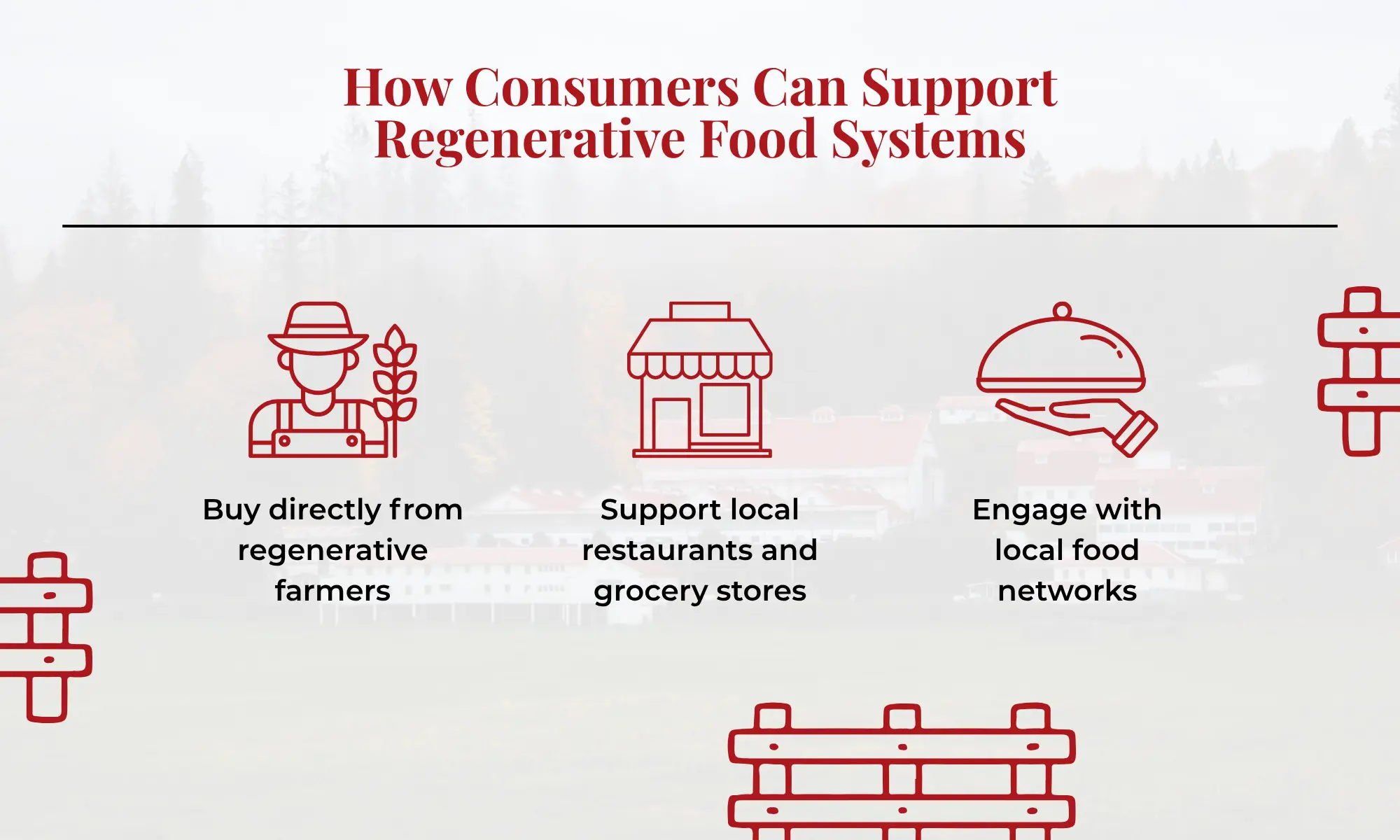
Consumers can drive change by buying from regenerative farmers, supporting local markets, and joining food networks.
As consumers, we have the power to shape the future of our food systems. By making informed choices, we can drive the transition to more sustainable and regenerative practices.
Making Informed Food Purchasing Decisions
Understanding food labels and certifications is just the beginning. We can take it a step further by learning about the farms and farmers who grow our food and the practices they use. Buying directly from farmers practicing regenerative agriculture through farmers’ markets, CSA programs, and Farmstands helps them capture more value for their products.
| Ways to Support Regenerative Food | Benefits |
|---|---|
| Buy directly from regenerative farmers | Increased value for farmers’ products |
| Support restaurants and grocery stores sourcing regenerative food | Creates market demand for regenerative practices |
| Engage with local food networks | Builds infrastructure for regenerative food systems |
Engaging with Local Food Networks
Engaging with local food networks through community gardens, food policy councils, and farm-to-school programs helps build the infrastructure needed for regenerative food systems to thrive. By supporting regenerative farms, we can create a more sustainable food system.
Cultivating a Regenerative Future
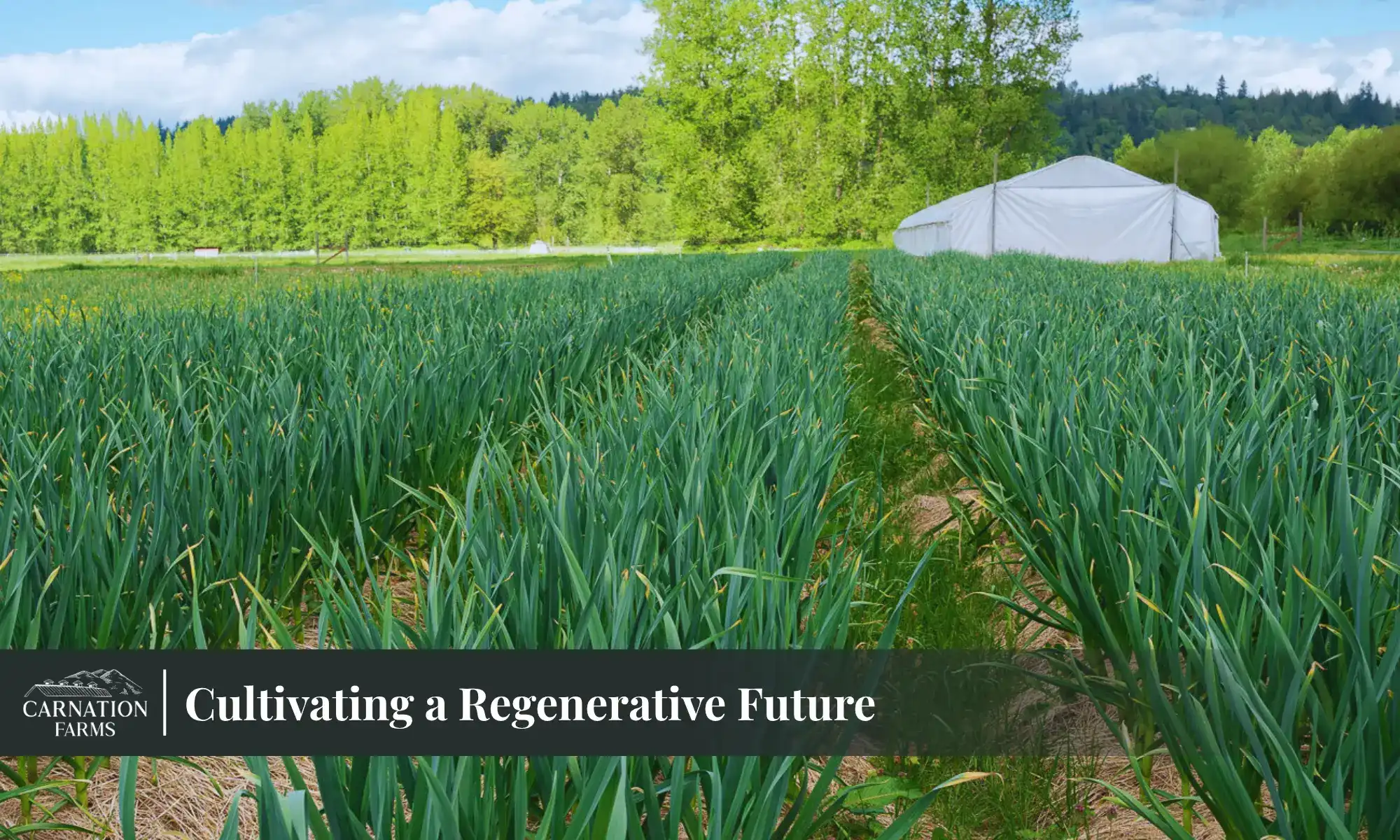
Carnation Farms leads the way in cultivating a regenerative future through sustainable and climate-smart farming.
Regenerative agriculture represents a hopeful path toward a healthier, more resilient food system. At Carnation Farms, our historic property in the heart of the Snoqualmie Valley serves as a living example of how thoughtful farming can restore the land, strengthen communities, and protect our planet for future generations.
By embracing regenerative practices, we nurture soil health, enhance biodiversity, and contribute to cleaner water. The impact extends far beyond our fields, inspiring others to join in the movement for a thriving, climate-smart future.
If you’re ready to learn more or get involved, we welcome you to visit our farm, attend a culinary workshop, or connect with our team. Together, we can grow a regenerative future rooted in care, balance, and abundance. Contact us today at (425) 844-3100 or send us an email at info@carnationfarms.org.
Regenerative Agriculture Frequently Asked Questions
1. What is the main goal of regenerative practices in farming?
Our main goal is to improve soil health, increase biodiversity, and promote ecosystem services while producing food. By doing so, we enhance the overall food system and contribute to a more sustainable future. We use cover crops to protect and enrich the soil, reduce erosion, and increase soil organic matter. Our practice also helps to support beneficial insects and pollinators, ultimately benefiting our crops and the environment.
2. How does regenerative farming impact water quality and cycles?
By improving soil health and structure, we can enhance water infiltration, reduce runoff, and promote water retention. This leads to better water quality and more efficient water cycles, benefiting both our farms and surrounding ecosystems.
3. How can I support regenerative farmers?
You can make a real difference by supporting farms that prioritize soil health and sustainability. Visit our Carnation Farms Farmstand to purchase fresh, locally grown food directly from our fields. Attend our community events and workshops to learn more about regenerative agriculture and meet the people behind the practices. You can also learn from our team and discover simple ways to incorporate regenerative principles at home or in your garden. Every purchase, visit, and action helps strengthen local food systems and sustain the future of farming.
4. How can conventional farmers transition to regenerative agriculture?
The best way to begin transitioning to regenerative agriculture is to start small. Conduct a soil health assessment, then introduce one new practice such as cover cropping. This gradual approach allows farmers to see results and build confidence before scaling up. While temporary yield dips and learning new methods can be challenging, connecting with experienced regenerative farmers and attending workshops like those offered by Carnation Farms provides valuable support. Financial assistance is also available through USDA conservation programs, private grants, and carbon markets to help offset transition costs and reward farmers for ecosystem services.
Recent Posts


 February 24, 2026
Best Snoqualmie Valley Meat Options in Washington