At Carnation Farms, every season teaches us something new. The lesson of 2025 was not that regeneration follows a straight path. It was the opposite.
Our 2025 Impact Report shows a year shaped by experimentation, adaptation, and deeper integration between land stewardship, culinary work, and community life. Some results aligned with what we hoped to see. Others challenged our assumptions. Grazed areas showed stronger biodiversity even when soil organic matter did not always rise as expected. Certain tilled fields increased in organic matter. Crops performed with less fertilizer. Livestock expanded across more acres. The Farmstand, farm dinners, workshops, and seasonal events brought thousands more people into direct relationship with the work happening here.
That is what makes this report so meaningful. It is not just a list of accomplishments. It is a record of what we are learning when we let the farm teach us.
Key Takeaways
- 2025 confirmed that regenerative agriculture outcomes are not linear, and that careful observation matters as much as ideology.
- Carnation Farms deepened its identity as a certified-organic nonprofit farm and community hub with a renewed mission and vision.
- Community engagement grew substantially, with 19,201 participant engagements across Farmstand activity, workshops, dinners, retreats, and public events.
- The culinary program expanded its role as a bridge between regenerative agriculture and everyday eating through farm dinners, value-added products, chef partnerships, and Farmstand offerings.
- Carnation Farms increased livestock impact across the land, reduced fertilizer use, and continued testing how grazing, cover cropping, and field rest affect long-term soil and ecosystem health.
- 2025 also made clear that wildlife management, flooding, and regional market realities are now central to how a regenerative farm must adapt for the future.
Where the Past Feeds the Future
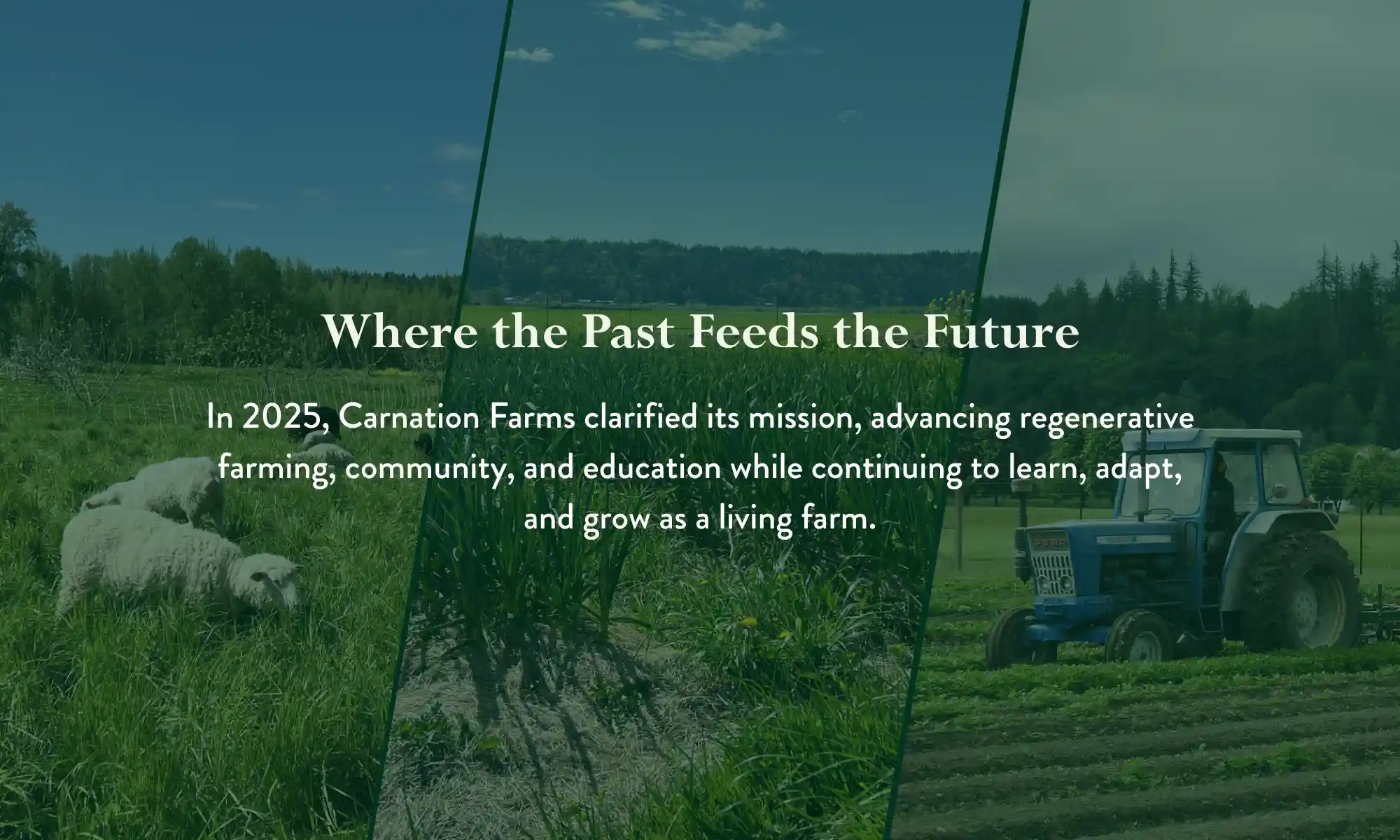
Carnation Farms continues its legacy by advancing regenerative farming, community connection, and education in the Snoqualmie Valley.
2025 marked Carnation Farms’ 117th season as a farm and its 9th season as a nonprofit sustainable farm. It was also a year of clarification.
The farm renewed its mission and vision, naming more clearly what it is working toward: a thriving, resilient regional food system rooted in regenerative farming, humane animal care, and vibrant rural economies. That clarity matters because Carnation Farms is not trying to separate agriculture, education, hospitality, and community engagement into separate lanes.
For more than a century, Carnation Farms has served as a living outdoor laboratory. In 2025, that role became even more visible. Rather than present regeneration as a finished formula, our farm is willing to learn in public, test assumptions, and adapt our practices to what the land, the animals, and the community are actually saying.
The Biggest Insight of 2025: Regeneration Is Not Linear
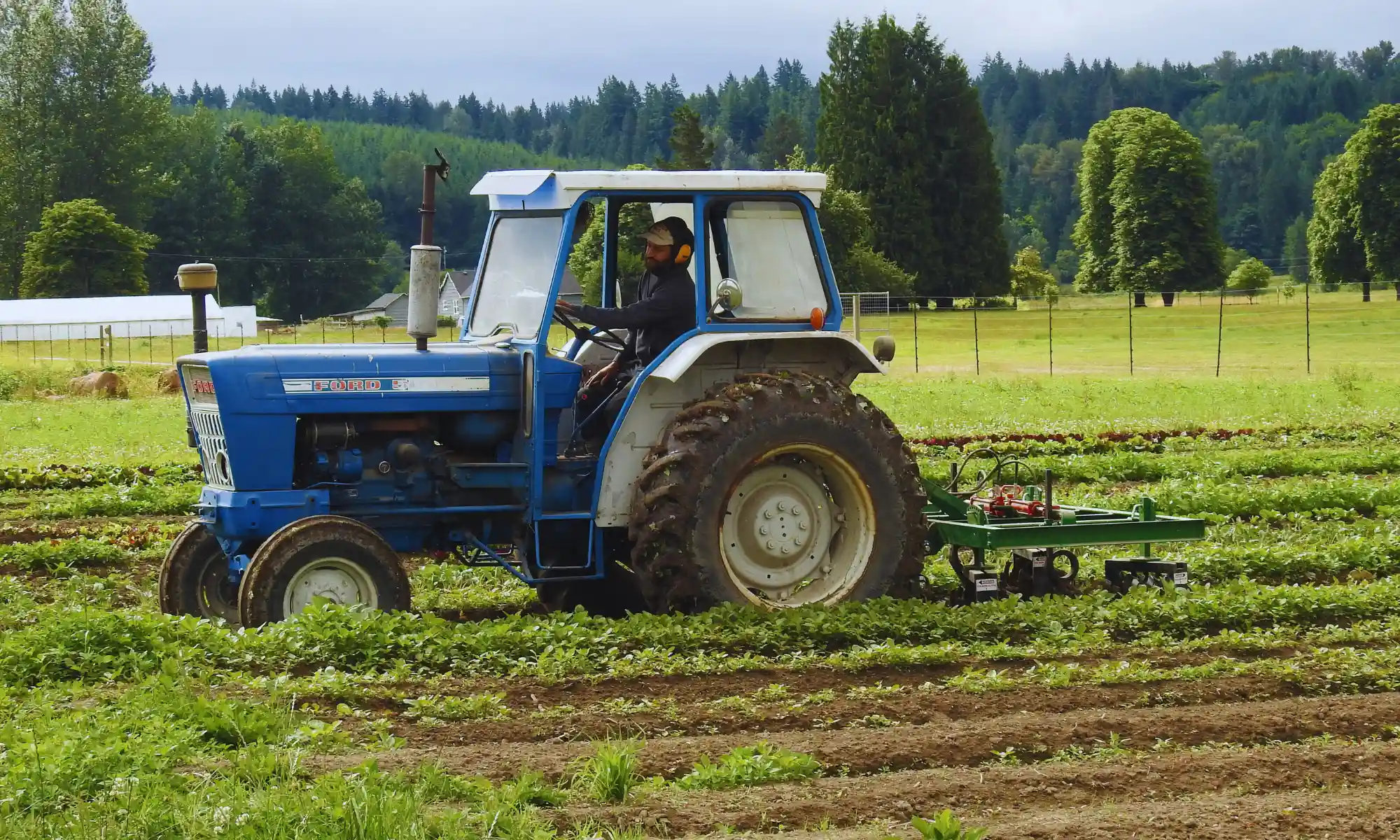
Regenerative farming at Carnation Farms shows that real outcomes vary, highlighting adaptive practices across fields and seasons.
One of the clearest ideas we learned is also one of the most important: regenerative agriculture does not produce neat, linear results.
That insight comes directly from the farm’s observations. In 2025, areas managed through grazing showed stronger biodiversity in some cases, yet reduced soil organic matter. In other places, fields that had been tilled showed increases in organic matter. At the same time, crops grew well even as fertilizer use was reduced. These are not contradictions so much as reminders that real ecosystems are dynamic.
For us, this reinforces the value of adaptive farming. The goal is not to force every field into the same prescription. The goal is to understand what each field needs, test combinations of practices, and respond with humility. That may mean cover cropping in one place, grazing in another, rest in another, and direct observation everywhere.
This is one of the strongest takeaways from the 2025 report: regeneration is not about proving a single method right. It is about learning how multiple relationships on the farm—soil and plants, animals and pasture, people and place—work together over time.
Building a Community Hub, by the Numbers
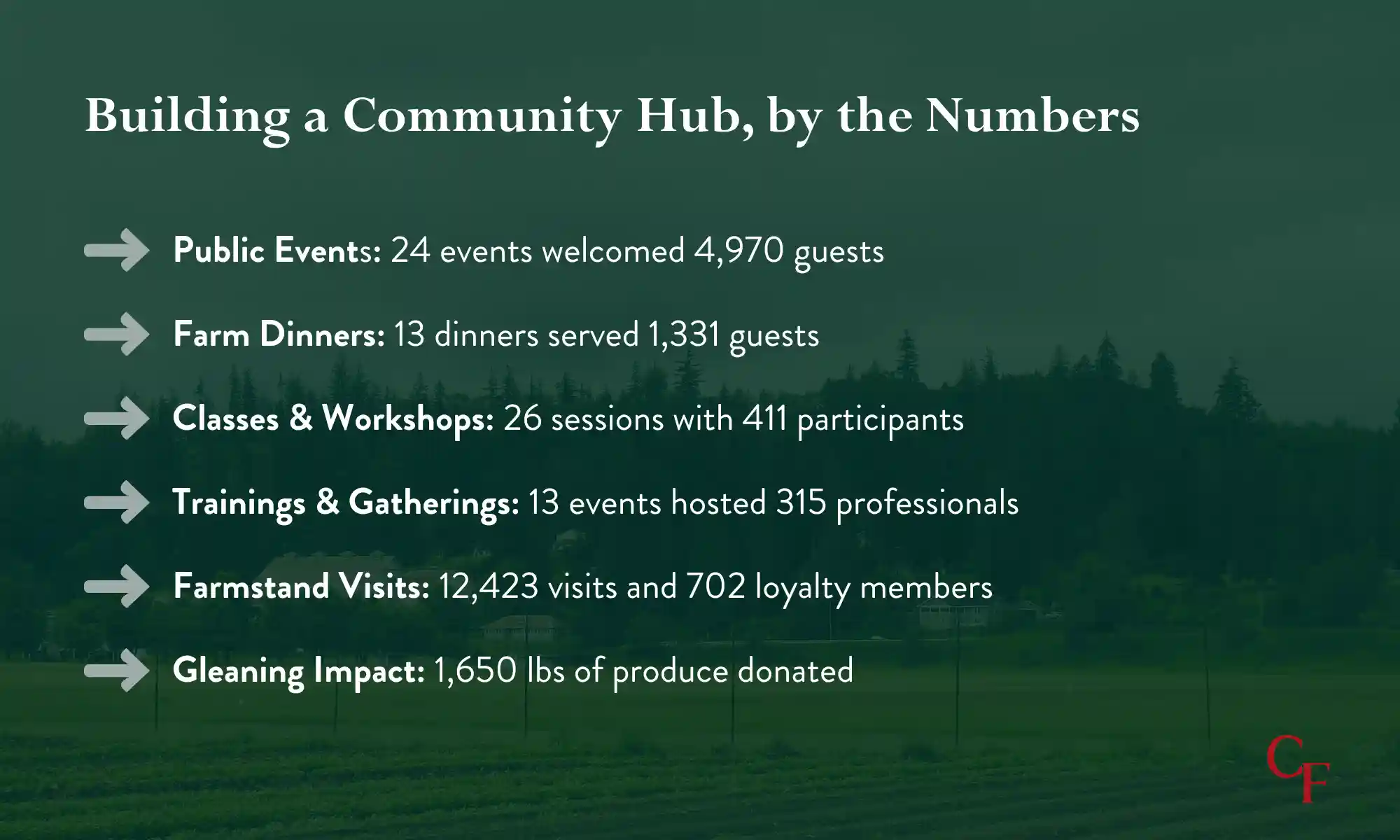
Carnation Farms 2025 Impact Report highlights community growth through events, farm dinners, workshops, and farmstand engagement.
If the 2025 report makes one thing unmistakable, it is that Carnation Farms is not only growing food. It is building a place where people gather around a shared regional food culture.
In 2025, Carnation Farms recorded 19,201 participant engagements through the Farmstand and programming, including classes, workshops, dinners, and retreats. That is not just attendance. It represents people choosing to step into a working farm and participate in what regenerative agriculture looks like in practice.
A few numbers tell that story especially well:
- 24 public events welcomed 4,970 neighbors, including Barn Dances, concerts, seasonal markets, and nonprofit showcases.
- 13 farm dinners were attended by 1,331 guests.
- 26 classes and workshops served 411 participants.
- 13 trainings and gatherings brought together 315 regenerative farmers, chefs, and food-system practitioners.
- The Farmstand saw 12,423 visits, and a loyalty program launched in October attracted 702 people, including 337 repeat customers.
- 8 gleaning sessions harvested 1,650 pounds of produce for FareStart’s community and school meals and for distribution through social service agencies.
Programs That Deepened Community in 2025
Two examples stand out.
The first is the seasonal markets, which is the largest in the Snoqualmie Valley, with 35 to 50 local artisans at each market. Even after the holiday market was cancelled because of flooding, the spring and harvest markets still drew 2,500 visitors.
The second is the farm’s training and workshop model. Carnation Farms hosted a regional FARMpreneurs Strategic Sprint, one of seven such sites in the country, helping community farmers strengthen leadership, strategy, and networks. The farm also launched a Rotational Grazing Series, a four-class program that brought together farmers, homesteaders, and conservation-minded land stewards for in-field learning across a grazing season.
Taken together, these programs show that Carnation Farms is not only feeding a community. It is helping build the knowledge, relationships, and confidence that a regional regenerative food economy depends on.
Creating a Culinary Center That Connects Field to Plate
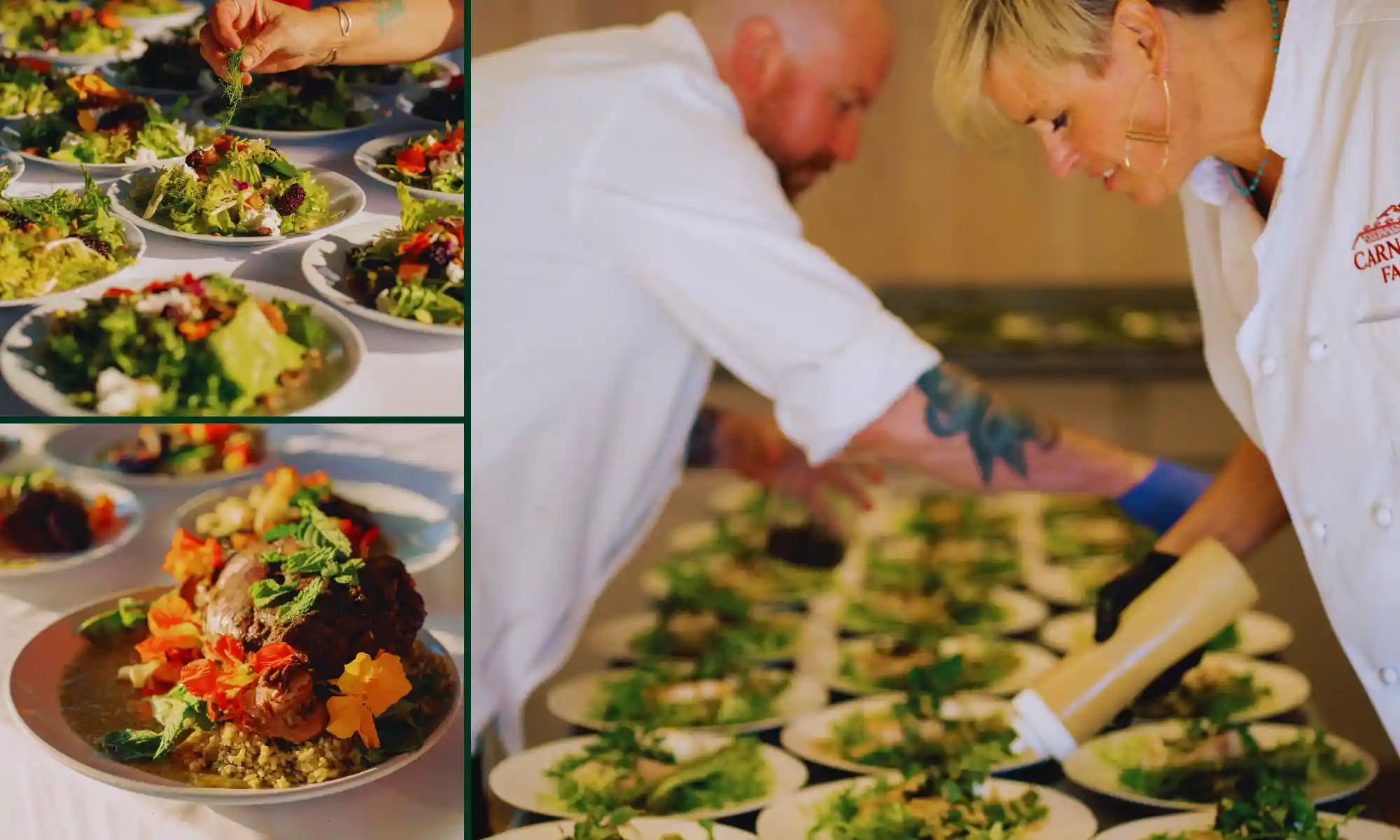
Carnation Farms culinary program connects field to plate through farm dinners, seasonal ingredients, and regenerative food experiences.
One of the most exciting parts of our 2025 Impact Report is how clearly it shows the culinary program maturing into a central expression of our farm’s mission.
At Carnation Farms, the culinary team is not downstream from the agriculture team. It is part of the same system. Crop planning, livestock management, breed selection, and seasonal menus all influence one another. We describe this as a “full cycle” approach, and that phrase feels exactly right.
In 2025, the culinary team expanded offerings to include more than 50 value-added products, including fresh pastas, bolognese, soups, spice blends, hot sauce, cured and smoked meats, baked goods, and more. Farmstand pop-ups brought additional energy with offerings like fried chicken, pastrami sandwiches, and smashburgers. The team also launched a packaged granola line, selling approximately 1,400 bags across regional grocery stores as the farm’s first value-added consumer packaged good.
Farm Dinners and Chef Partnerships
We expanded the Farm Dinner program, with 13 dinners attended by more than 1,000 guests. These meals did more than celebrate seasonal food. They became spaces for storytelling about regenerative agriculture and the many regional producers who contribute to a healthier food system.
Carnation Farms also hosted two James Beard Foundation Chef Bootcamps for Policy and Change, each bringing together 30 chefs from around the country. Those visits matter because they help chefs connect regenerative farming to how they source, cook, and advocate throughout their careers.
What Changed on the Land in 2025
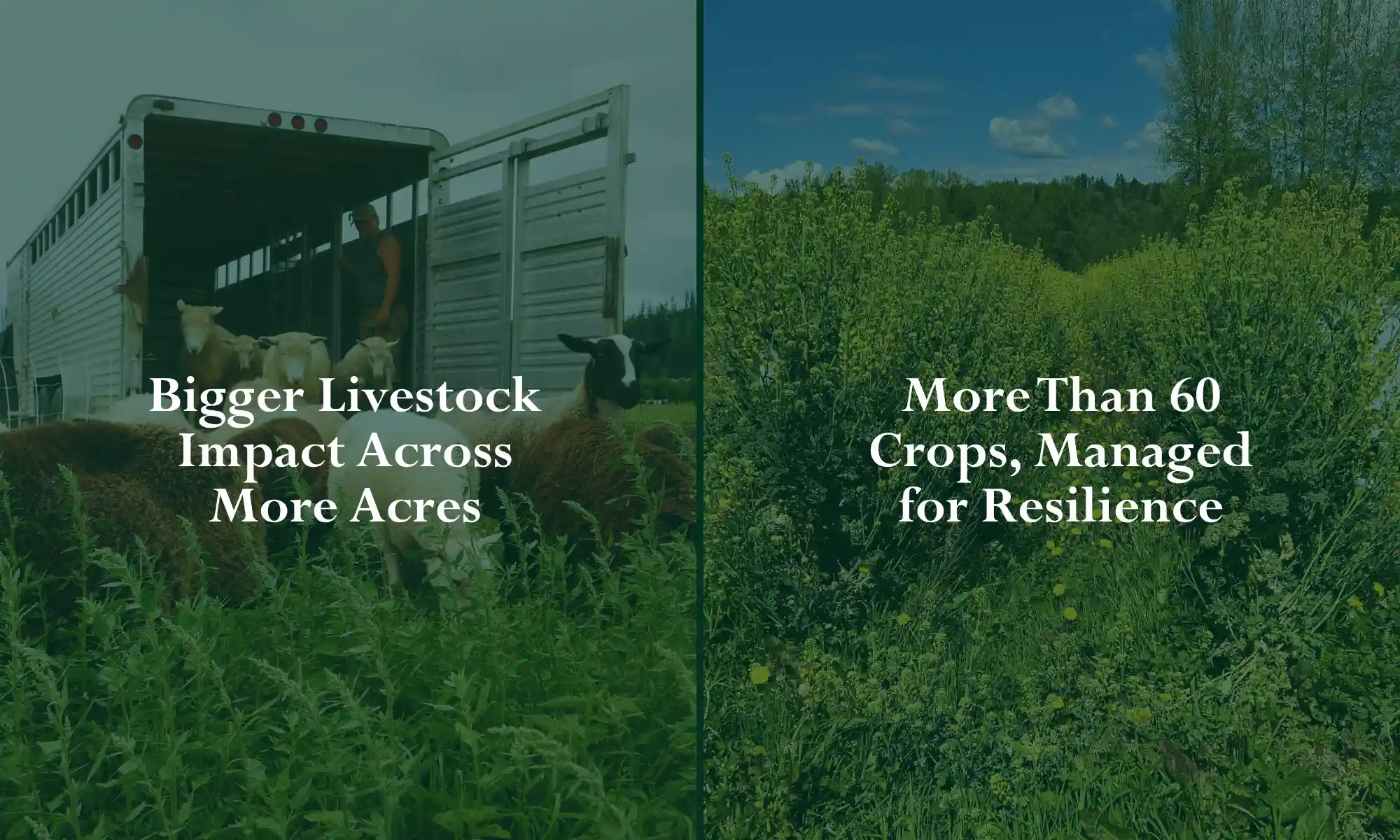
Carnation Farms expanded livestock impact and diversified crops in 2025 to strengthen resilience and regenerative farming outcomes.
The 2025 impact report shows major shifts in farm operations, particularly in how our farm used livestock, fertilizer, and direct sales to strengthen the whole system.
Bigger Livestock Impact Across More Acres
In 2025, Carnation Farms expanded the number of animals on pasture to increase the ecological effect of grazing and improve revenue. The results were significant:
- Ewes grazing pastures increased 694%, from 17 in 2024 to 135 in 2025.
- 158 lambs were raised, a major increase over the previous year.
- 230 acres of pasture were grazed, up from 200 acres in 2024.
This matters because larger herds allow grazing to influence more acres before those fields move into periods of regenerative rest. It also reflects a practical reality: stronger livestock enterprises help support the long-term financial sustainability of the farm.
Less Fertilizer, Stronger Signals
One of the most encouraging accomplishments is fertilizer reduction.
In 2025, Carnation Farms achieved:
- 100% elimination of fertilizer from greens and annual herb production
- 50% reduction in fertilizer for tomato production
More Than 60 Crops, Managed for Resilience
The crops program continued to rotate more than 60 crops across the farm, using diversity itself as a resilience strategy. That diversity helps reduce pressure on individual fields, distribute nutrient demands, and buffer against climate volatility and pest pressure.
At the same time, the wholesale markets produced low margins in 2025, particularly for greens and herbs. In response, the farm plans to move more of its crop program toward Farmstand sales, farmers markets, and direct-to-restaurant channels. That is another example of adaptive thinking: the farm is not only testing what grows well, but also what distribution models best support the mission.
What the Farm Learned About Soil Health in 2025
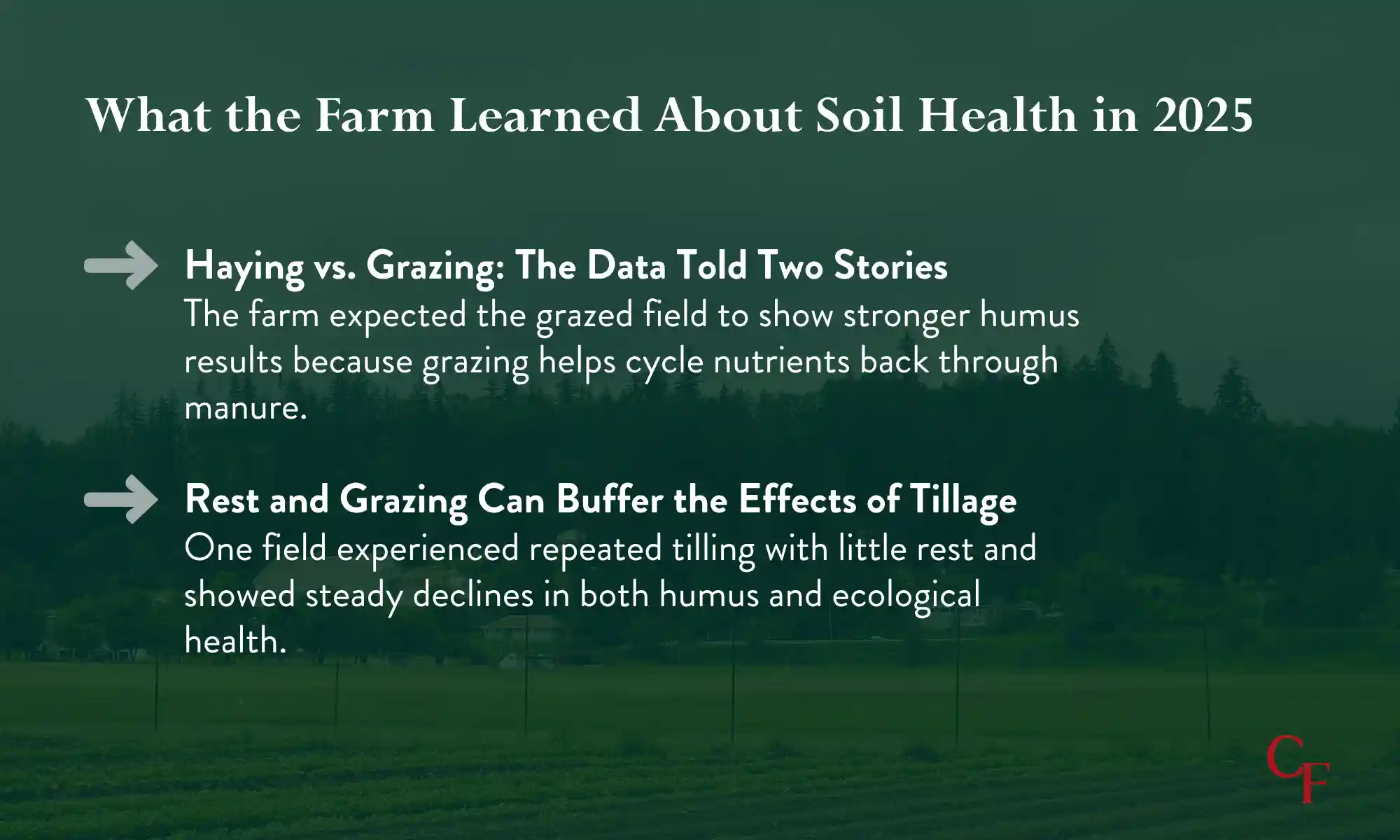
Carnation Farms 2025 insights show soil health varies with grazing, tillage, and rest, reinforcing adaptive regenerative farming practices.
Carnation Farms continues to use humus content as a key soil-health metric while also relying on Ecological Outcome Verification (EOV) for pasture assessment. One of the clearest lessons from 2025 is that no single metric tells the whole story.
Haying vs. Grazing: The Data Told Two Stories
The farm expected the grazed field to show stronger humus results because grazing helps cycle nutrients back through manure. Instead, the grazed field showed lower humus content in 2025 than the hayed field. Yet the grazed field had a stronger and improving EHI score, thanks to more live forage and faster nutrient cycling.
Rest and Grazing Can Buffer the Effects of Tillage
One field experienced repeated tilling with little rest and showed steady declines in both humus and ecological health. The other field had been heavily tilled earlier, but then cover-cropped, rested, and rotationally grazed before returning to production. That field saw gains in humus and greater stability over time.
The lesson is not that tillage is inherently good or bad. The lesson is that rest, cover, and animal impact can help buffer soil from more intensive production cycles. That kind of insight is exactly what a meaningful impact report should deliver. It does not oversimplify the work. It helps clarify what better questions to ask next.
Holistic Animal Stewardship Is Part of our Public Life
The livestock program includes:
- Short-duration, high-intensity grazing followed by long rest periods
- Breed testing to identify animals best suited to the farm’s climate, soils, and culinary goals
- Life-stage specific care for ewes and lambs
- Whole-animal utilization through Farmstand products, dinners, and recipes
- Ethical harvest practices, including on-site harvest for direct meat-share customers when regulations allow
- Educational opportunities such as Meat & Greet events, butchery classes, and rotational grazing instruction
Animal stewardship is not only about raising healthy animals, but it’s about helping the community understand how our animals fit into a regenerative system.
Wildlife and Flooding Became Even More Central in 2025
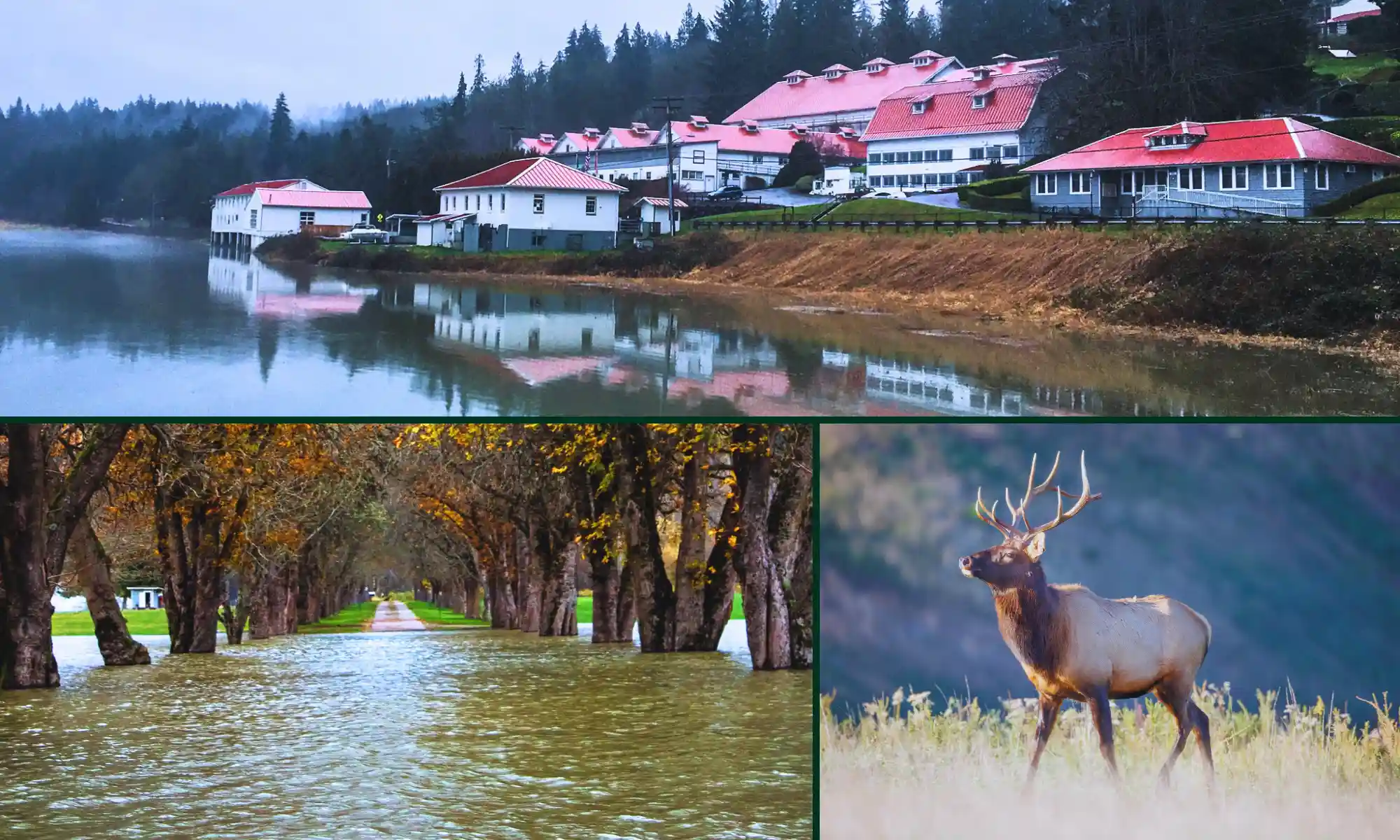
Flooding and wildlife pressures shaped Carnation Farms in 2025, highlighting the need for adaptive land management and ecological balance.
The 2025 season also reinforced that regeneration does not happen in a vacuum. Weather extremes and wildlife pressures are shaping the future of the farm just as surely as crop rotations or grazing plans.
Flooding
The Snoqualmie River reached its highest levels in more than a decade, causing intense flooding on the farm. In response, Carnation Farms is planning flood buffers, reduced late-season tilling in vulnerable areas, and more flood-resilient perennial plantings along the riverbank.
Elk Management
The farm also continued facing major pressure from elk. 150 elk were present on the pastures during peak hunting season, reducing the farm’s ability to raise cattle and sheep at intended levels. In 2025, Carnation Farms allowed hunting on the property for the first time in more than 50 years, alongside nonlethal hazing efforts. The early results were encouraging: elk began spending more time in riparian and forested areas and less time in open pasture.
This is especially important because it reflects a more mature understanding of stewardship. Regenerative agriculture is not only about what happens inside fenced production areas. It also requires balancing wildlife habitat, agricultural productivity, and long-term ecological health.
Looking Ahead to 2026
In 2026, Carnation Farms plans to:
- Expand livestock capacity, including more cattle on organic pastures and more sheep breeding
- Continue soil carbon and EOV testing while adding soil microbiology measurements
- Expand direct-to-consumer crop sales and reduce dependence on low-margin wholesale channels
- Introduce a paid internship program for transitioning military service members
- Increase wildlife monitoring and continue testing nonlethal elk management solutions
- Build a butcher counter and expand hot food, sauces, spices, granola, and other consumer packaged goods
- Deepen zero-waste nutrient cycling through composting kitchen scraps and animal waste
- Continue water reuse after recycling more than 2.5 million gallons of water in 2025
- Expand educational and public programming, including welcoming a Climate Farm School cohort
See the 2025 Impact in Person at Carnation Farms
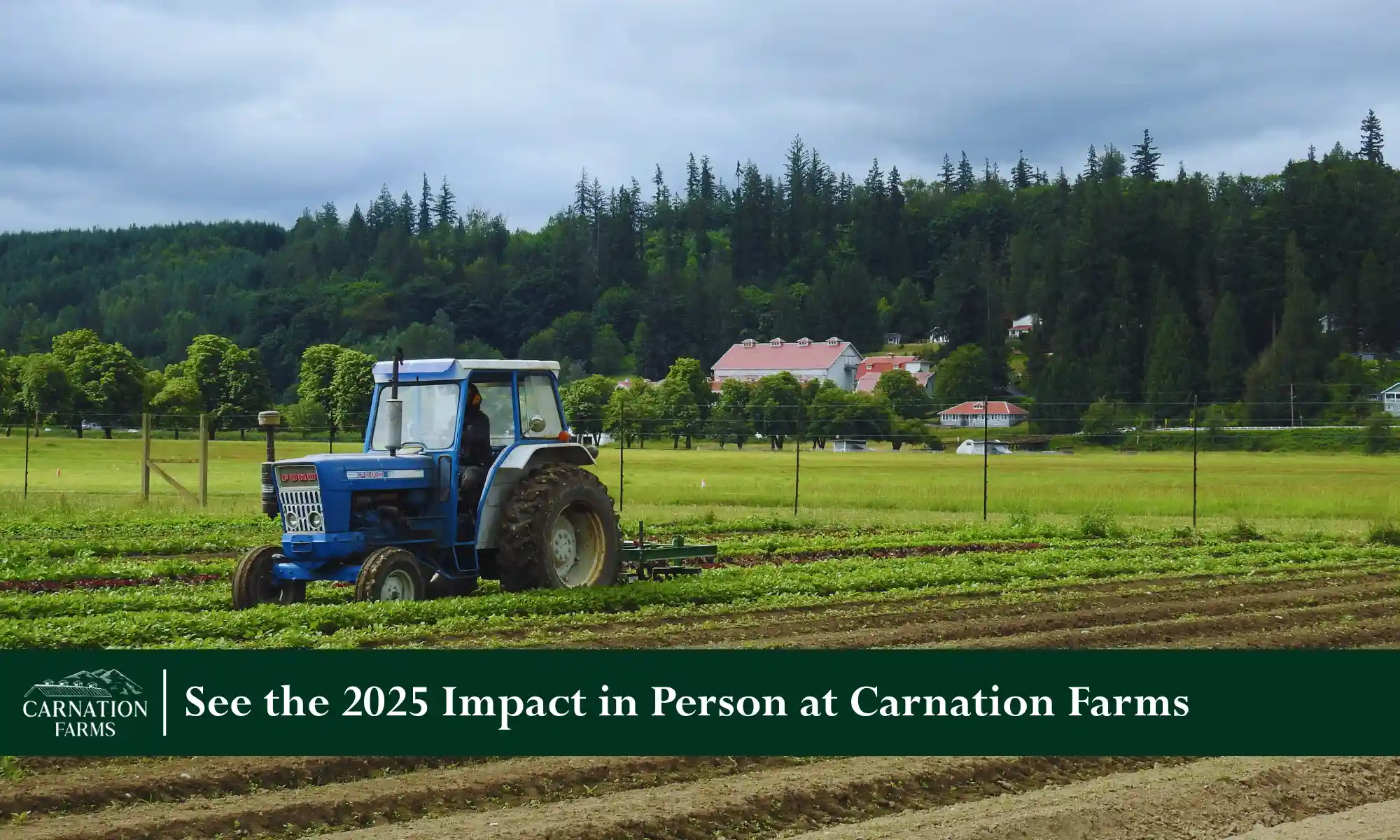
Visit Carnation Farms to experience regenerative farming, community programs, and the 2025 impact across the Snoqualmie Valley.
If the 2025 Impact Report makes one thing clear, it is that the work at Carnation Farms is meant to be experienced, not only read about. You can see it in the fields, taste it at the Farmstand, hear it in live storytelling at a farm dinner, and feel it in the energy of a workshop, market, or barn dance.
If you want to explore the work behind the impact report, visit Carnation Farms for a seasonal event, Farmstand stop, farm dinner, or educational program. You can also support the mission by shopping the farm, attending an event, donating, or sharing the story with your community.
To learn more, call 425-844-3100, email info@carnationfarms.org, or send us a message online.
2025 Impact Report Frequently Asked Questions
1. What is the biggest takeaway from the Carnation Farms 2025 Impact Report?
The biggest takeaway is that regenerative agriculture outcomes are not linear. In 2025, Carnation Farms saw results that challenged assumptions, including grazed areas with stronger biodiversity but lower humus, and tilled fields with improved organic matter. Our report reinforces the importance of adaptive, field-specific management.
2. What changed the most at Carnation Farms in 2025?
Several areas saw major change. Community engagement expanded significantly, the culinary program launched new products and partnerships, livestock numbers increased sharply, fertilizer use dropped, and the farm deepened its use of soil and ecosystem monitoring to guide future decisions.
3. How did Carnation Farms grow as a community hub in 2025?
The farm recorded 19,201 participant engagements across Farmstand activity, workshops, dinners, retreats, and public events. Seasonal markets, farm dinners, classes, and professional trainings all helped strengthen Carnation Farms’ role as a gathering place for the Snoqualmie Valley and the broader regional food community.
4. What did the 2025 report reveal about soil health at Carnation Farms?
The impact report showed that soil health cannot be measured by a single number alone. Humus content remains important, but Ecological Outcome Verification added a broader view of pasture function. In some cases, fields with lower humus still showed stronger ecological health because of live vegetation, manure breakdown, and more active nutrient cycling.
5. How did livestock contribute to regenerative agriculture in 2025?
Livestock played a larger role across the farm in 2025. More animals grazed more acres, helping cycle nutrients, suppress undesirable plant species, and improve ecological health across pastures. The livestock program also became more closely integrated with Farmstand offerings, public education, meat shares, and culinary programming.
6. Why were flooding and wildlife such important parts of the 2025 report?
Because regenerative farming must respond to real ecological pressures. Flooding affected fields and future planning along the Snoqualmie River, while elk pressure limited pasture productivity and required new management strategies.
7. How can I support the work described in the 2025 Impact Report?
You can support Carnation Farms by visiting the Farmstand, attending events, participating in educational programs, purchasing farm products, or making a donation. Every form of support helps sustain the farm’s work in regenerative agriculture, culinary programming, and community building.
Recent Posts
 February 24, 2026
Best Snoqualmie Valley Meat Options in Washington
 February 17, 2026
Guide to Planning a Destination Wedding in the US